 Oahu Volcano Tours
What Is the Hardest Hike on Oahu?
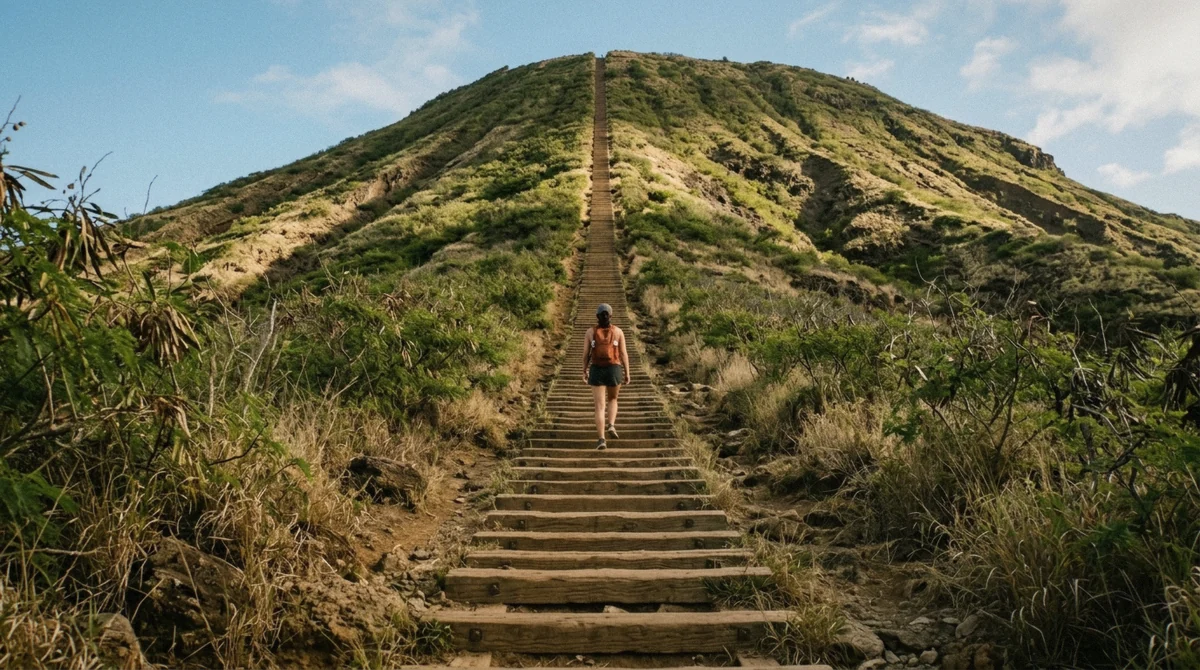
The hardest hike on Oahu that a visitor can walk in one morning is the Koko Head stairs, 1,048 railway sleepers up a volcanic cone. The island's famous crater climbs are measured against each other per mile, and then the steepest one is explained, with what makes it hard and how to prepare for the heat. The island's longest ridge routes are harder still and need local knowledge, and guided options are linked from the Oahu volcano tours homepage.
Quick answer The short answer
The hardest hike on Oahu for a visitor with one morning is the Koko Head stairs, 1,048 railway sleepers with about 1,200 feet of climbing in roughly 1.4 to 1.6 miles round trip. The island's hardest hikes overall are long ridge and summit routes in the Koolau and Waianae ranges that need local experience. Koko Head is free to climb and needs no permit, and a guided sunset slot with pickup costs $129.
Key takeaways
- The hardest hike on the island overall is a long Koolau or Waianae ridge route. The hardest volcanic climb you can do in one morning is Koko Head: 1,048 steps and about 1,200 feet.
- Steepness is where Koko Head stands alone: about 1,600 feet of climbing per mile one way, against about 700 at Diamond Head and about 500 at Makapuu. The climbing table shows the sums.
- There is no fee, permit or reservation for Koko Head. The guided sunset hike costs $129, covers pickup and a guide to the trailhead, and has free cancellation up to 24 hours.
- If hard sounds like too much, the Diamond Head sunrise shuttle at $64 gives a crater summit with 560 feet of climbing.
Guided Options From the Hardest Crater to the Easiest
These listings run from the steepest volcanic climb on Oahu down to a crater walk with a shuttle. All three pick up in Waikiki, so you can match the effort to your legs and not to your transport.
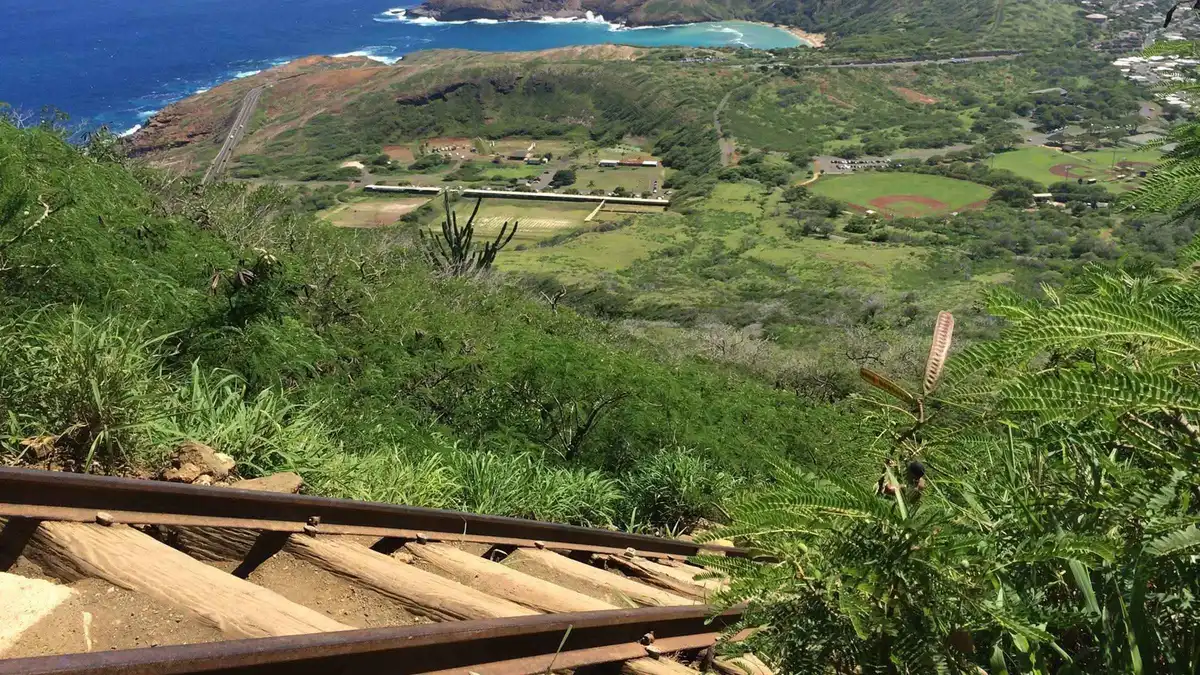
Oahu: Koko Crater Sunset Hike with Pickup
The 1,048-step WWII tramway up Koko Crater with a ride from your Waikiki door and a guide as far as the trailhead. Above that it is a self-guided climb. Food and drink are not included and the listing carries a long list of weight, age and fitness exclusions.
- Cancellation
- Free cancellation 24h
- Operator
- Oahu Hiking
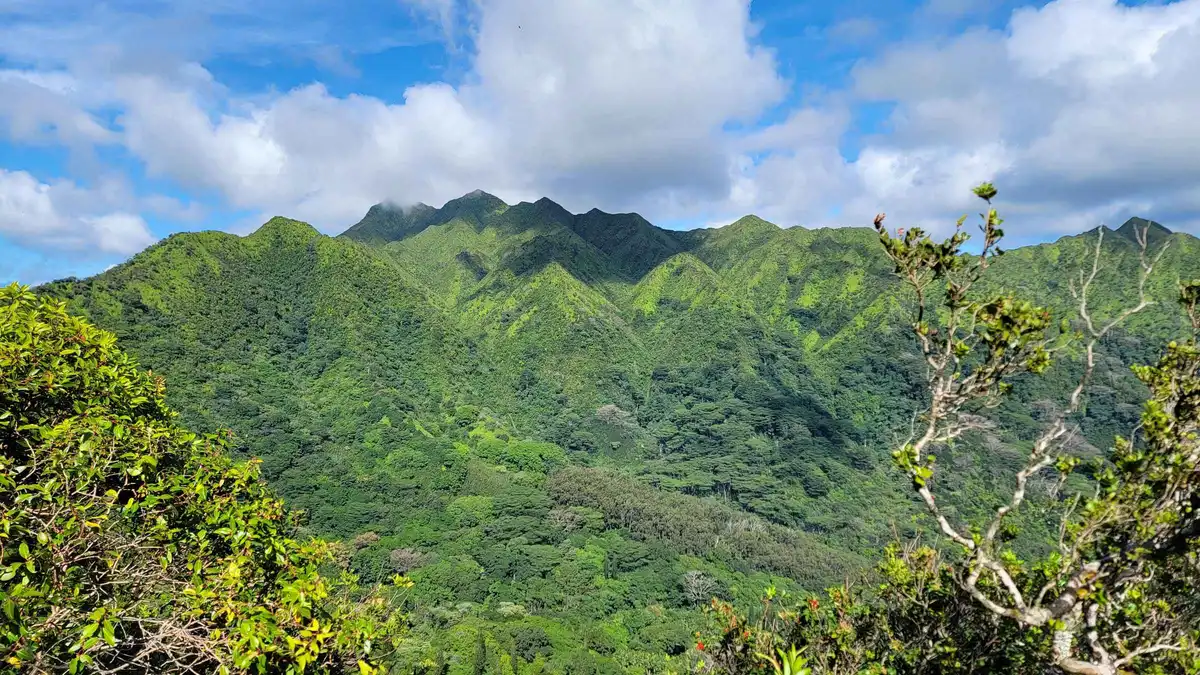
Honolulu: Hawaiian Volcanic Rainforest Hike
A guided walk on the slopes of the extinct Koolau shield, the cheapest way to stand on volcanic ground on Oahu with a naturalist. Rain gear, repellent and a hip pack come with it. Views to Konahuanui at 3,150 feet and Mount Kaala at 4,025 feet. No one under 8, and the listing asks for above-average fitness.
- Cancellation
- Free cancellation 24h
- Operator
- Bike Hawaii
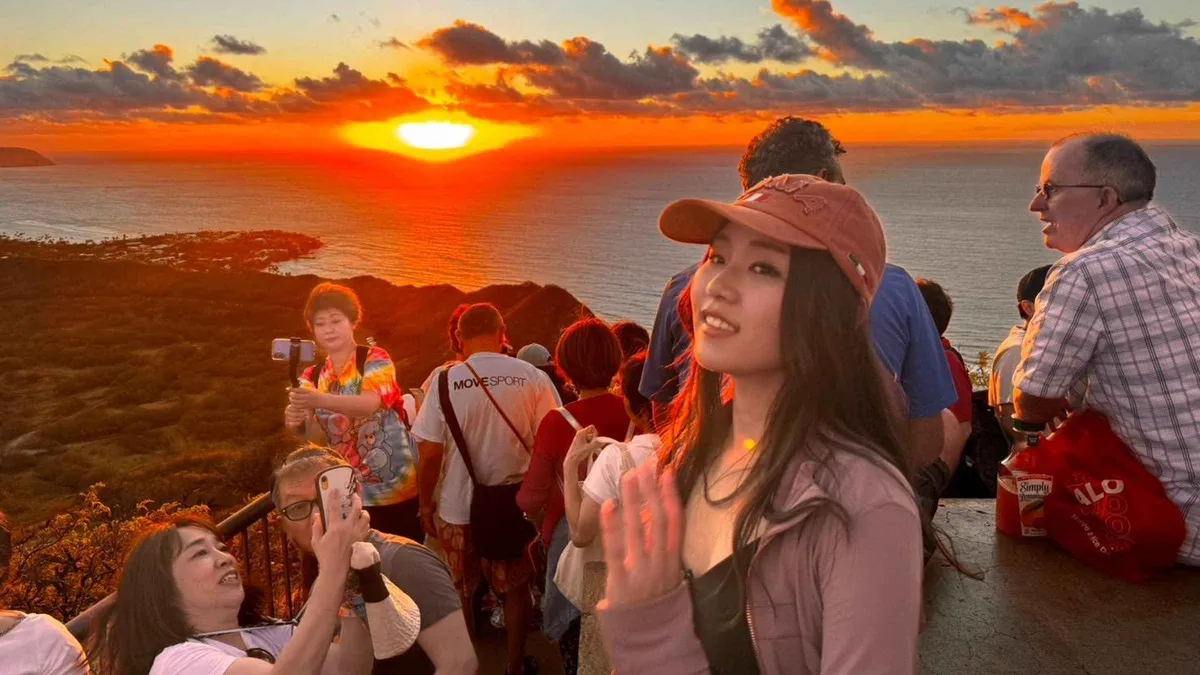
Oahu: Diamond Head Hike with Roundtrip Transportation
The sunrise shuttle to the Diamond Head summit trail: a 5:00 AM pickup, the state reservation and entry fee handled for you, and the hotel by 8:00. There is no guide on the trail, and value for money is the weakest of its four review scores at 3.9 out of 5, because the same entry costs $5 on the state site.
- Cancellation
- Free cancellation 24h
- Operator
- Blue Wave Tour, Inc
What Is the Hardest Hike on Oahu?
It depends whether you mean the hardest on the island or the hardest you can reasonably walk as a visitor, and the answers differ.
Two honest answers
Oahu hikers agree that the island's hardest routes are not the famous ones. They are long ridge and summit traverses in the Koolau and Waianae ranges, where the trail is overgrown, the drop-offs are real and rain turns the ground to grease. Independent trail guides name Castle Trail, the Schofield-Waikane Trail, the Olomana peaks and Kahekili among them, and describe Mount Olympus as having fixed ropes on steep wet sections. These need local knowledge, a partner and good weather, so this page does not rank them or print their numbers.
The hardest hike that a visitor can walk in one morning from Waikiki is Koko Head. It has no ropes and no navigation, but it is relentlessly steep, unshaded and unforgiving. That is the hike this page measures, against its two neighbours.
Why this page stays on the craters
Oahu's famous short climbs sit on its old volcanic cones, and a visitor on a volcano-themed trip is choosing between them. Koko Head is the hardest, Diamond Head the middle option and Makapuu the easiest. For the real long ridge routes, the state's Na Ala Hele trail pages are the place to check status, permits and closures before you commit.
Source: Hawaii DLNR hiking on Oahu, Noah Lang Photography, Love Oahu.
How Steep Is Each Crater Hike, Measured Per Mile?
Total climb hides the real difference, because the three hikes cover very different distances.
The climbing sums
Total elevation gain makes Diamond Head look half as hard as Koko Head, and Makapuu look nearly equal to it. Dividing the climb by the distance walked uphill tells a different story. The table uses the state's published figures for Diamond Head and Makapuu, and the trail guide figures for Koko Head, with the uphill distance taken as half the round trip.
| Hike | Climb | Uphill distance | Climb per mile uphill | Surface |
|---|---|---|---|---|
| Koko Head | About 1,200 ft | About 0.75 miles, half of 1.4 to 1.6 miles round trip | About 1,600 ft | 1,048 railway sleepers, no shade |
| Diamond Head summit | 560 ft | 0.8 miles | 700 ft | Trail with a final tenth of a mile of stairs |
| Makapuu Point Lighthouse | 500 ft | 1.0 mile, half of 2.0 miles round trip | 500 ft | Paved to the lookout, hot and exposed |
What the numbers mean on the day
At about 1,600 feet per mile, Koko Head climbs more than twice as steeply as Diamond Head and over three times as steeply as Makapuu. That is why a hike that sounds short on paper takes people to their limit. Most climbers take between 30 and 90 minutes in total, and the spread between those two numbers is mostly fitness and heat.
The state lists Diamond Head as steep and suggests 1.5 to 2 hours for the whole visit, and Makapuu as moderate at about 2 hours. Those times include stops for the view, which on Koko Head are really stops to breathe.
Source: Hawaii DLNR Diamond Head, Hawaii DLNR Makapuu, Koko Crater Railway Trail guide. Per-mile figures are calculated from these.
Is Koko Head Harder Than Diamond Head?
Yes, and the gap is bigger than the distances suggest.
Same island, different effort
Diamond Head's trail is 0.8 miles to the summit with 560 feet of climbing, and its last tenth of a mile is stairs. The path is paved and stepped in places, there are lookout points along it and the state suggests allowing 1.5 to 2 hours. Koko Head is a straight line of 1,048 wooden sleepers with about 1,200 feet of climbing in 0.75 miles up and no switchbacks to rest on.
On costs and rules the two also differ. Diamond Head requires a reservation for non-residents, with $5 entry per person and $10 per vehicle, while Koko Head is free and has no reservation. The Diamond Head crater hike page covers the permit system, and the Koko Head stairs page covers the climb.
Source: Hawaii DLNR Diamond Head, Koko Crater Railway Trail guide.
What Makes the Koko Head Stairs So Hard?
Five things stack up, and only the first is the grade.
Five difficulty factors
The grade is the obvious one, but the climb is hard because of what comes with it. The table lists them with what to do about each.
| Factor | What it is | What helps |
|---|---|---|
| The grade | About 1,600 feet per mile, one straight line up the old tramway | Short steps, a steady pace and a stop every few minutes |
| No shade | The slope is exposed cinder with almost no cover | Start early or at sunset, wear a hat and use sunscreen |
| No water | Nothing is sold on the trail or at the summit | At least one liter per person, drunk before you need it |
| The gap | Midway the steps cross open space beneath, with a dirt bypass described beside it | Use the bypass if heights bother you |
| The descent | Uneven sleepers that can be slippery when wet | Slow steps, poles help, avoid after rain |
Heat and timing
There is no published gate for the stairs in the sources used here, so confirm local access if you want a very early or late solo start. The most important decision is when you climb. The trail faces the morning sun with almost no shade, so the later you start the harder it gets.
Sunset is the other cool edge of the day, and a headlamp is essential if the descent overlaps dusk. Maintenance sometimes closes the trail for short periods, so check before you drive out.
Source: Koko Crater Railway Trail guide, Oahu Hike.
Is Mount Kaala the Hardest Hike on Oahu?
It is the highest, and it belongs to the long-route category, not the crater one.
The highest point on the island
Mount Kaala is the island's highest summit at 4,025 feet, and it is the eroded remnant of the Waianae volcano, one of the two shields that built Oahu. Konahuanui, the high point of the Koolau range, stands at 3,150 feet. Both are volcanic, but both sit well away from the craters near Waikiki and need a full day and local preparation. One independent guide describes the trail to Kaala as ending on a boardwalk through a cloud forest.
What the guides agree on is that altitude is not what makes Oahu's hardest trails hard. Mud, exposure, route-finding and weather do. That is the reason a short, steep, exposed climb such as Koko Head earns the hardest-visitor-hike title while the island's true hardest routes stay with experienced locals.
Source: Love Oahu, site pages on Oahu volcanoes.
What Does Each Hard Climb Cost?
Money is the other thing that separates the three, and the cheapest is the hardest.
Cost side by side
The cheapest of the three crater hikes is the steepest. The table adds up the entry cost and the guided option for each, using the state's fees and the listing prices.
| Hike | Entry if you go alone | Guided or shuttle option | What the option adds |
|---|---|---|---|
| Koko Head | Free, no reservation, free parking | $129 sunset hike | Waikiki pickup, a guide to the trailhead and sunset timing |
| Diamond Head | $5 per non-resident plus $10 per vehicle, reservation required | $64 sunrise shuttle | Pickup at 5:00 to 5:10 AM, the reservation and entry included |
| Rainforest hike on the Koolau slopes | No park fee applies | $90 guided walk | Pickup, a nature guide, rain gear, repellent and a hip pack |
Should You Do the Hard One Guided?
A guide on Koko Head buys transport, timing and a safety net, but not a narrator on the stairs.
What the guided sunset hike includes
The Koko Crater sunset hike costs $129, runs 3h 30m door to door and picks up from any Waikiki address. A guide goes with the group to the trailhead and the climb above that is self-guided. Cancellation is free up to 24 hours. No children under 5 are allowed, and the listing carries age, weight and fitness exclusions, so read it before you book. Food and drink are not included, so the water is yours to carry.
Walking it free means no cost at all and your own start time, as long as you have a way to reach Koko Head District Park.
Easier volcanic walks if you want less
If the numbers above scare you, step down a level. The Diamond Head sunrise shuttle at $64 is a 0.8-mile summit with the reservation and entry handled. The volcanic rainforest hike at $90 covers 2.5 miles with 600 feet of climbing, asks for above-average fitness and excludes children under 8.
For a view-first comparison, see the most beautiful hike on Oahu.
How Do You Hike Safely in Oahu Heat and Rain?
The state and local guides give the same short list, and the danger is skipping it.
The short list
The Hawaii State Parks pages for Makapuu and Kaena Point both warn that trails are usually sunny, hot and windy, and advise a hat, sunscreen and plenty of water. Independent guides add the rule that matters most on the harder ridge trails, which is to avoid them after heavy rain or when rain is forecast, because the steep soil turns slippery and rescues are frequent. Tell someone your plan, carry a headlamp if you might finish near dark and start before the heat peaks.
The volcano safety page covers the Big Island hazards of gas and unstable ground, and the what to wear on an Oahu volcano tour page covers footwear and layers.
Source: Hawaii DLNR Makapuu, Hawaii DLNR Kaena Point.
Which Level of Hard Fits You?
Match the climb to your legs, not to a list.
If You are fit, want a real test and have one morning.
Climb Koko Head free, early or at sunset, with at least one liter of water.
If You want the test but not the logistics.
Book the $129 sunset hike with Waikiki pickup and free cancellation up to 24 hours.
If You want a summit without the grind.
Take Diamond Head at 560 feet, or the $64 shuttle that includes the reservation.
If You want volcanic ground, a guide and a lighter day.
Try the $90 rainforest hike or compare every Oahu volcano tour.
Hardest Hike on Oahu Questions
What is considered the hardest hike on Oahu?
The island's hardest routes are long ridge and summit traverses in the Koolau and Waianae ranges. The hardest popular crater climb is the Koko Head stairs.
What is the hardest trail on Oahu for a visitor?
Koko Head, with 1,048 steps and about 1,200 feet of climbing in roughly 1.5 miles round trip. It is free and needs no permit.
How long does the Koko Head hike take?
Most hikers take 30 to 90 minutes in total. The guided sunset slot runs 3h 30m including transport and the descent.
Is Diamond Head a hard hike?
It is steep but short: 0.8 miles to the summit and 560 feet of climbing, with the state suggesting 1.5 to 2 hours. See the Diamond Head page.
Can beginners do the Koko Head hike?
Fit beginners can, slowly, but it is the hardest crater walk near Waikiki. Newcomers often do better on Diamond Head or Makapuu first.
Is there a hard hike on Oahu that also has lava?
No. Oahu has no active volcano, and its craters are extinct. Active lava is on the Big Island, compared on the Oahu volcano tours homepage.
Should I hike the harder trails after rain?
No. Independent guides warn that steep ridge trails become slippery and dangerous after heavy rain, and the hardest ones have frequent rescues.