 Oahu Volcano Tours
Is Kilauea Erupting Right Now?
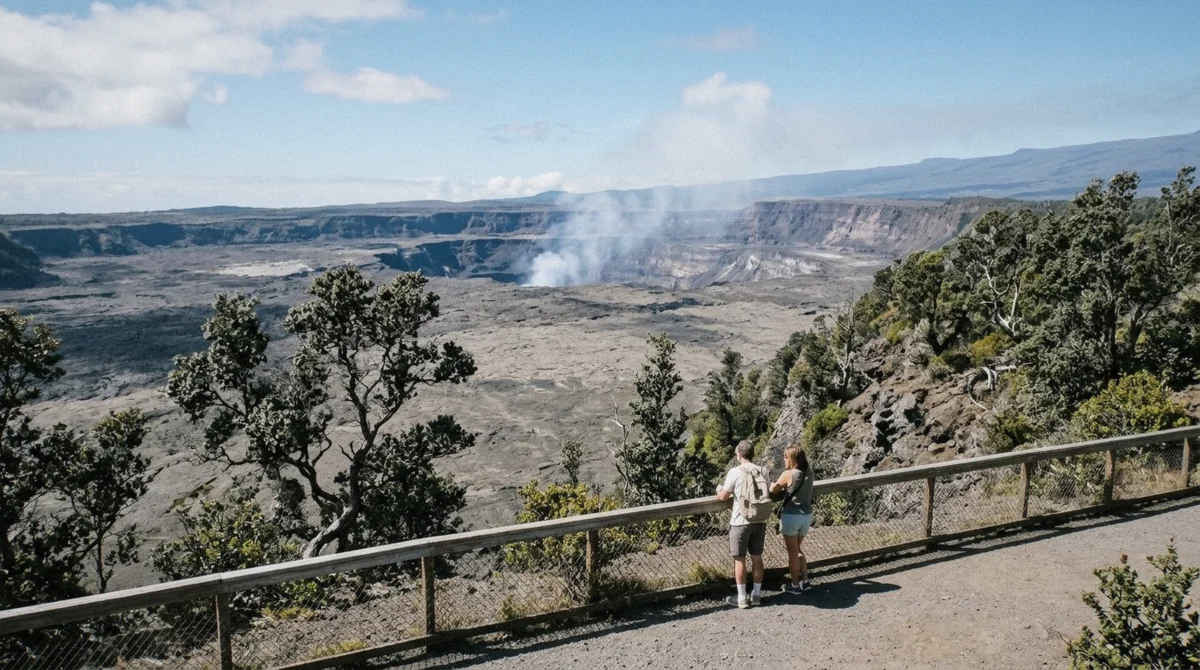
Is Kilauea erupting right now? Yes, in short episodes from its summit crater since 23 December 2024, and lava only fountains for under 12 hours at a time, with pauses of two or more weeks between. Below is how to read the official status in a minute, where the live cameras are, which part of the volcano erupts and what that means if you are planning a visit from Oahu, where there is no active volcano. It sits alongside every Oahu volcano tour that reaches the park.
Quick answer The short answer
Kilauea has erupted in short lava fountaining episodes since 23 December 2024, each usually under 12 hours with pauses of two or more weeks between them. So the eruption is a repeating cycle, and on any given day the summit is more likely resting than fountaining. The observatory's daily Volcano Updates page says which phase it is in today, and the park webcams show the summit live.
Key takeaways
- Open the HVO Volcano Updates page first. It states whether fountaining is under way or paused, and it is the status that settles the question.
- The pattern is a cycle, not a river of lava: fountaining under 12 hours, then two or more weeks of pause. A random day is more likely a pause than a show.
- Oahu has no active volcano, so lava means a flight of about 215 miles to the Big Island. The one-day trips are compared on the Oahu volcano tours homepage.
- If you go, the park is open 24 hours and the glow is best at night. Parking lots fill by 10 am, so arrive early or after dark.
- Not sure what an episode is? The eruption explainer defines the words the observatory uses.
Big Island Day Trips From Oahu That Reach the Park
Both day trips below fly from Honolulu and spend time at Hawaii Volcanoes National Park, where the eruption is visible from the overlooks when it is active. Neither can promise lava on your date, so read the status first.
 from $589.99
Best reviewed
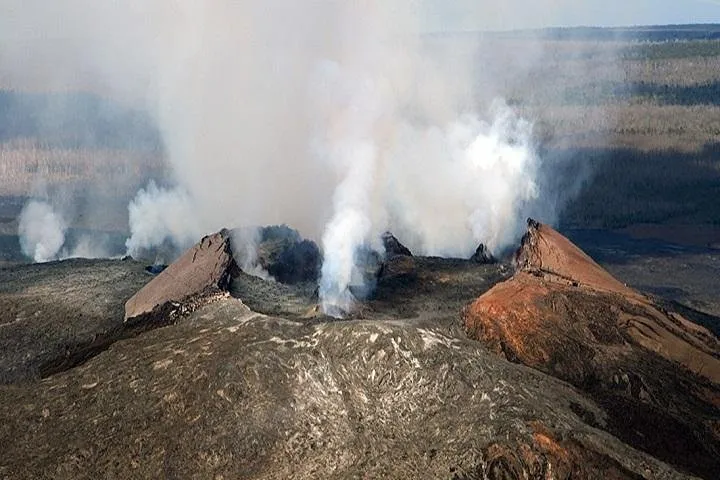
Hawaii Volcanoes National Park Experience Departing from Oahu
The strongest review record of any day trip from Oahu, 4.75 from 272 ratings, and the only one that spends its stated two hours in the park after crossing the island from Kona. Meals are yours, lunch is a stop at the Punaluu bake shop, and you get yourself to Honolulu airport.
- Round-trip Honolulu to Kona flights and park admission included
- Two hours inside Hawaii Volcanoes National Park
- Greenwell Farms coffee estate and Punaluu Bake Shop, the southernmost in the US
- Punaluu black sand beach and the Kohala Coast
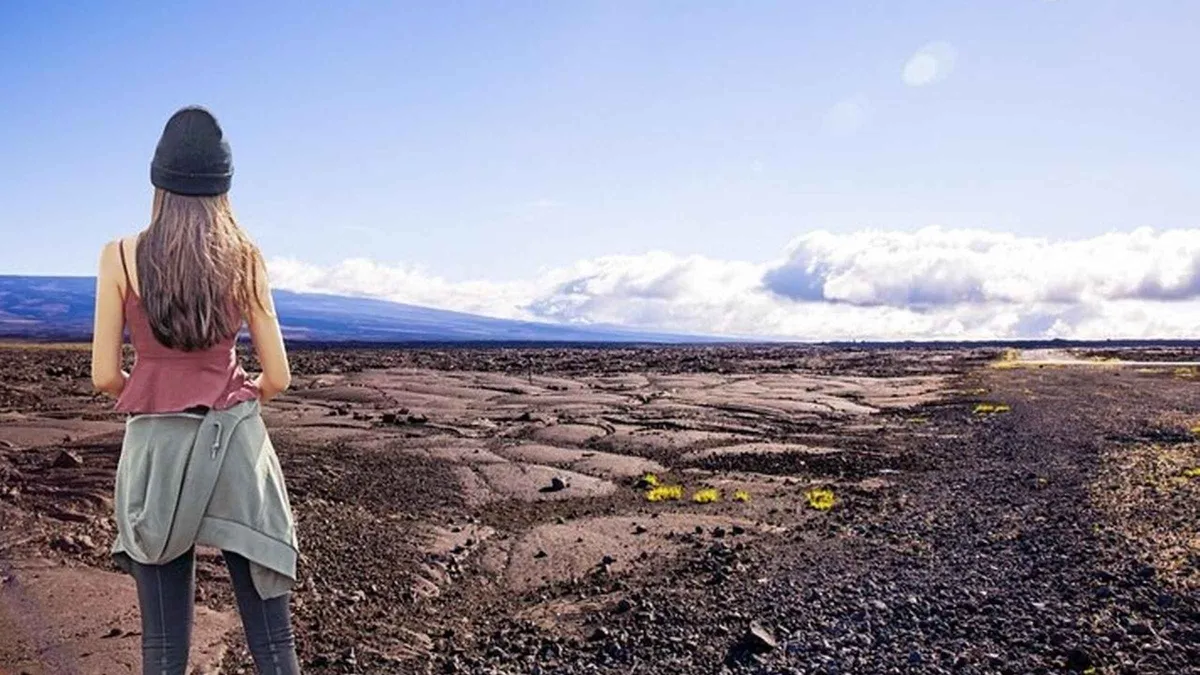
Big Island Hawaii Volcano Day Tour from Oahu with Hotel Pickup
The only listing here that collects you at your Waikiki hotel and hands you back there: 56 pickup points, flights to Hilo, park admission and a Hilo loop of Rainbow Falls, the farmers market and a black sand beach. Lunch is not included and the booking is non-refundable at any notice.
- Cancellation
- Non-refundable
- Operator
- Tournet Hawaii, Inc
What Is the Current Status of Kilauea Volcano in Hawaii?
The eruption at the summit is ongoing as a series of episodes, and the day-to-day phase is published by the observatory, not by a travel page.
The answer in one sentence
Kilauea has been erupting from vents inside Halemaumau crater at its summit since 23 December 2024, and the eruption comes in episodes. The observatory describes lava fountaining episodes that generally last less than 12 hours and are separated by pauses of two or more weeks. Between episodes the vents can still glow and degas, which is why a pause is not the same as the eruption being over.
A page like this one cannot tell you which phase the volcano is in today, because that changes in hours. Any travel site that prints "erupting now" or "paused now" in its text is stale within a day. What stays true is the pattern and where the live answer lives.
Where each official source helps
Three official sources cover everything a visitor needs. The table says what each one answers, so you open the right one for the question you actually have. All three are free and need no account.
| Source | What it answers | Use it when |
|---|---|---|
| HVO Volcano Updates | Is fountaining under way, paused or building toward another episode, plus the alert level and any forecast window | Deciding whether today is a show day |
| HVO webcams and summit livestreams | What the summit looks like this minute | Checking glow or fountaining before you drive out |
| NPS eruption viewing page | Which overlooks are open, what to bring, parking and air quality guidance | Planning the visit itself |
| Volcano notification service | Email notices when the observatory changes status | Watching a trip date from Oahu |
Why a forecast window is not a promise
The observatory watches ground tilt at the summit. After an episode the ground swells again, and that swelling is how it knows another episode is likely in the coming weeks. It publishes a forecast window only once enough tilt data have been collected, and it states plainly when it is too early to forecast.
Treat any window as a probability, never as a date. That matters if you are booking a flight from Honolulu days ahead, which the planning section below deals with.
Source: USGS Hawaiian Volcano Observatory, USGS volcano notifications.
How Does Kilauea Erupt: Episodes and Pauses?
The word erupting hides a cycle with three phases, and each one looks different from the overlook.
The three phases of one cycle
Kilauea at the moment is not a steady flow. It runs in a loop that the observatory tracks through tilt, earthquakes and gas. The table follows one loop from start to finish and says what a visitor would see in each phase.
| Phase | What the instruments show | What you would see |
|---|---|---|
| Fountaining episode | Lava fountains from a vent and the summit ground deflates. Episodes generally last under 12 hours | Fountains and a bright glow, best seen at night, with a plume of gas and ash above the crater |
| Immediate aftermath | Fountaining stops, vents keep glowing and degassing, and tilt turns back to inflation | Weak to moderate glow at night and a gas plume. Fresh lava cools for days |
| Repose | Slow inflation, low-level tremor bursts and small earthquakes. Pauses run two or more weeks | Steam and gas, often no visible lava at all. The crater is still worth seeing |
What this means for the odds on a given day
If episodes are under 12 hours and pauses are two weeks or more, a single episode fills less than one day in every fourteen. That is arithmetic on the observatory's own description, not a forecast, but it explains why most visitors on a random day see steam and glow rather than fountains. The honest way to plan is to treat a fountaining episode as a bonus and the park as the trip.
It also explains why the glow at night often matters more than the daytime view. Even a weak glow from the vents is visible after dark, and the park recommends visiting before sunrise or after sunset when an eruption is active, both to see it and to avoid the crowds.
Source: USGS Hawaiian Volcano Observatory, National Park Service.
Is There a Live View of Kilauea Volcano Right Now?
Yes. The observatory runs summit webcams and livestreams, and the park points visitors to them before a drive.
Where the cameras are
The HVO webcam page lists the summit cameras, and the USGS livestream channel carries the summit streams. Open one in the evening Hawaii time, because glow is the easiest thing to see on a webcam, and a daytime frame in fog can look like nothing at all.
A webcam shows the crater from a fixed angle, so it tells you whether something is happening, not what the experience at an overlook feels like. Use it as a go or no-go check on the day you plan to drive up, not as a substitute for the status text.
What a blank camera does not mean
Fog and rain cover the summit often, and the park says clouds or rain can block the view even when the volcano is active. If the camera is white, read the Volcano Updates text before you decide. The text describes what the instruments recorded overnight, which a cloudy lens cannot.
Source: USGS webcams, National Park Service.
Which Part of Kilauea Is Erupting?
The summit, inside a crater that visitors can look at but not enter.
Halemaumau crater, two vents
The eruption is at the summit of Kilauea, inside Halemaumau crater within the larger summit caldera. The observatory names two primary vents there, a north vent and a south vent. It also reports that lava flows are contained to the caldera, which is the main reason the eruption has stayed a spectator event instead of a threat to nearby communities.
The National Park Service says the eruption area itself is closed. What is open is a set of overlooks along Crater Rim Drive that look across the caldera toward the vents. Fallout of fine fragments can drift downwind, and the observatory notes that tephra has fallen mostly in closed parts of the park.
Which overlooks, which side of the park
The park splits the viewing into two directions from the Welcome Center. Crater Rim Drive West leads to the Welcome Center, Kilauea Overlook and Uekahuna, which usually have more parking. Crater Rim Drive East leads to Kilauea Iki, the Nahuku lava tube, Devastation and Chain of Craters Road.
After a large episode the overlooks nearest the vents close first: the park reopened parts of the summit on 18 March 2026 after the 10 March fountaining, but kept Kilauea Overlook and Uekahuna closed because they had received the most tephra. Use the numbered viewing areas on the park map and stay behind rope lines, which mark volcanic gas, unstable cliff edges and hidden ground cracks.
Source: National Park Service, USGS Hawaiian Volcano Observatory, NPS news release, 10 March 2026, NPS news release, 18 March 2026.
What US Volcano Is Erupting Right Now, and Where in America Is It?
For Hawaii the answer is Kilauea on Hawaii Island, and the national picture is published by the USGS.
Kilauea on Hawaii Island
The volcano erupting in Hawaii is Kilauea, on the island of Hawaii, called the Big Island, about 215 miles from Honolulu. Hawaii Volcanoes National Park sits around its summit. From Hilo the park entrance is 30 miles and 45 minutes away on Highway 11, and from Kailua-Kona it is 95 miles and two to two and a half hours, according to the park.
For other volcanoes in the country, the USGS volcano notification service lists current status for every monitored US volcano, and it can email you when one changes. That is the right place for a national answer, since eruptions elsewhere change faster than a travel guide can follow.
What about the Kona side and Oahu
People searching for the Kona volcano are usually looking for the same eruption, because Kilauea is the one with the crater to visit and Kona is the airport and resort side of the island, 95 miles from the park. There is no active volcano on Oahu. Waianae and Koolau, the two volcanoes that built the island, are extinct, and the craters you can walk are old tuff cones.
The active volcanoes on Oahu page explains why, and the volcanic history of Oahu covers how the island formed.
Source: National Park Service directions, USGS volcano notifications.
Should You Fly From Oahu to See an Episode?
Plan the trip around the park, and treat fountaining as a bonus you cannot book.
What the cancellation terms say
A day trip from Honolulu is a booked flight, so its cancellation rule matters more than usual when the show is unpredictable. The listings here differ on exactly that point, and the table sets them side by side.
| Day trip | Price | Time away | Cancellation | Park time |
|---|---|---|---|---|
| Hawaii Volcanoes National Park Experience | $589.99 | 12 hours from the Honolulu flight | Free up to 24 hours | 2 hours stated inside the park |
| Hilo day tour with hotel pickup | $585 | 12 hours 30 minutes door to door | Non-refundable | Overlook, Steam Vents, Nahuku lava tube and Chain of Craters Road |
A realistic plan
Check HVO two or three days out. If the status says fountaining happened very recently, another episode is unlikely for roughly two weeks, so book for the park, the steam and the glow. If the observatory says inflation is building and gives a forecast window, a free-cancellation trip is the safer way to chase it. Book the non-refundable listing only if the day is worth it with no lava at all.
The full set of choices, including the helicopter and Kona-side options, is on the Oahu volcano tours homepage. For the flight, the car and the park gate, the how to get to Hawaii Volcanoes National Park page lays out the routes.
What Should You Bring and When Should You Go to See the Eruption?
Go before sunrise or after sunset, arrive early, and dress for cold, wet and dusty conditions.
The park gear list
The park publishes a short list for eruption viewing, and it reads like a cold-weather night out, not a beach day. The table groups it by what each item protects against.
| Bring | Why the park asks for it |
|---|---|
| Headlamp | Night visits, when glow and fountains are most visible |
| Sturdy shoes | Rough, uneven ground around the overlooks |
| Warm clothing and a rain jacket | Weather at the summit is cool and unpredictable |
| Long sleeves, long pants, eye protection and a dust mask | Protection from falling tephra, the fine volcanic fragments that drift downwind |
Timing and crowds
Volcano watching at the summit has its own rush hour. The park warns that lots can fill by 10 am and that parking at Nahuku and the Kilauea summit is limited from 10 a.m. to 3 p.m. When there is an eruption, expect longer waits at the entrance and traffic on the road. The park suggests visiting before sunrise or after sunset, and it stays open 24 hours a day, so a dark arrival is allowed. Check the park's air quality page before you go and while you are there, because volcanic gas can be hazardous to sensitive groups.
The what to wear on an Oahu volcano tour page covers clothing for the day trips in more detail, and the best time to visit Oahu volcanoes page covers the season.
Is the Park Open and What Does It Cost?
Open around the clock, with entry paid per vehicle, and some areas closed.
Hours and fees
Hawaii Volcanoes National Park is open 24 hours a day, 7 days a week, including holidays. Entry is $30 per private vehicle, which covers the passholder and up to 14 passengers. A motorcycle is $25 and a person on foot or on a bike pays $15, with children 15 and under exempt.
The park also warns of closures and delays from a two-year construction project at the summit, so check the alerts before the drive. For the full DIY version of a visit, the can you visit Kilauea without a tour page works through it.
Source: National Park Service fees, conditions.
Kilauea Eruption Status Questions
Is Kilauea erupting right now?
Kilauea has erupted in episodes since 23 December 2024, so the volcano is in an eruptive cycle, but whether it is fountaining this hour is a question for the observatory's Volcano Updates page. Most days are pauses.
How long does a Kilauea eruption episode last?
The observatory says episodes generally last less than 12 hours. The pauses between them run two or more weeks, so an episode fills a small share of the calendar.
Can I see lava on a day trip from Oahu?
Possibly, but no operator can promise it. The 12-hour park experience gives 2 hours in the park, and the hotel pickup day tour visits the overlook, steam vents and lava tube, so both are worth it without fountaining.
Where can I watch Kilauea live?
The USGS publishes summit webcams and livestreams. Glow is easiest to see after dark Hawaii time.
Is there an active volcano on Oahu?
No. Oahu's two volcanoes are extinct and its craters are old tuff cones. The Diamond Head crater hike and the Koko Head stairs are volcanic walks without lava.
Is it safe to visit while Kilauea is erupting?
The park keeps the eruption area closed and opens overlooks that look across the caldera. Stay behind rope lines, check air quality, and read the volcano safety page.
How far is Kilauea from Honolulu?
About 215 miles by air, roughly a one-hour flight to the Big Island. From Hilo the park is 30 miles and 45 minutes by car on Highway 11.