 Oahu Volcano Tours
Why Does the Kilauea Volcano Have Closed Off Areas?
Parts of Kilauea are closed because of volcanic gas, explosions of hot lava and unstable ground near the summit crater, and a separate construction project closes the visitor center. Kilauea closed areas therefore fall into two groups, and this guide sorts the hazard closures from the construction ones, shows what stays open and explains how an Oahu volcano tour works around them.
Quick answer The short answer
Parts of Kilauea are closed because of three ongoing hazards that can cause serious injury or death: volcanic gas, explosions of hot lava and unstable ground. The 2018 collapse widened the pit of Halemaumau crater to 1.5 km (about 0.9 mi) across and about 450 m (1,480 ft) deep. Other closures come from a summit construction project, not from the volcano.
Key takeaways
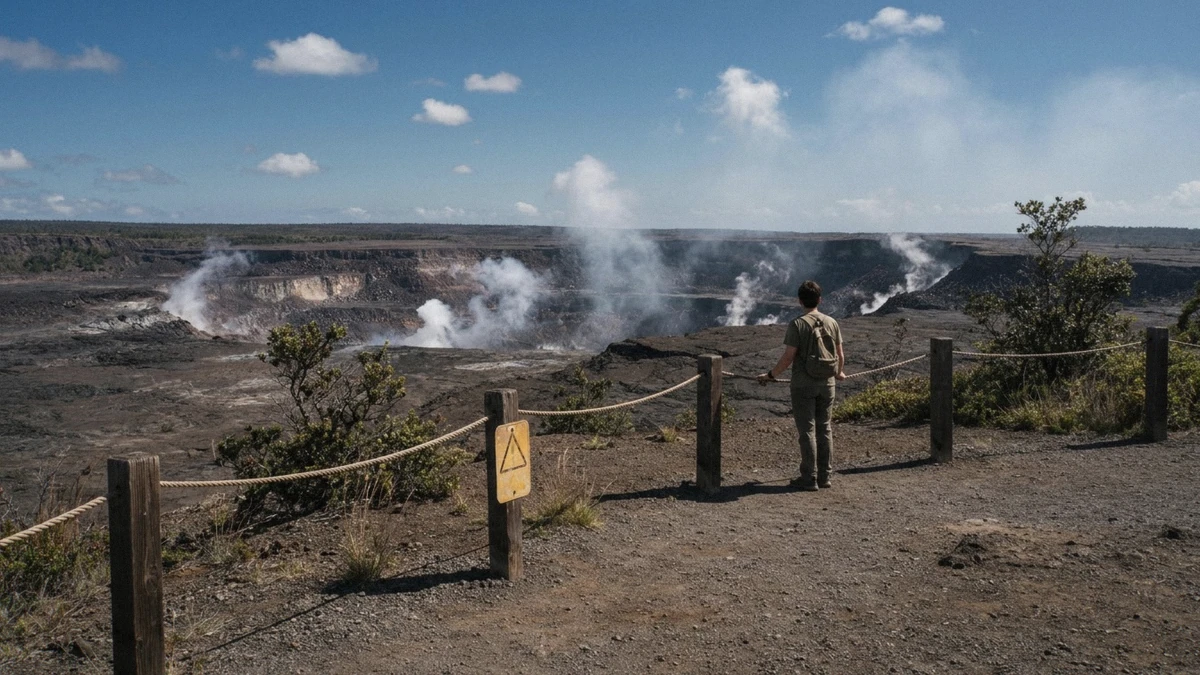
- Hazard closures: the eruption area and the crater rim are closed because of gas, ejected hot lava and cracked, unstable ground. Rope lines and signs mark them.
- Construction closures are separate: the Kilauea Visitor Center is closed for renovation and the Uekahuna overlook limits large vehicles.
- The park stays open 24 hours a day at $30 per vehicle or $15 per person on foot, and the overlooks along Crater Rim Drive show the summit from open ground.
- The hotel pickup day tour and the 12-hour park experience use only open areas. Check the eruption status guide and the Oahu volcano tour homepage.
Day Trips From Oahu That Stay in the Open Areas
A closure does not cancel the park visit. These trips use the overlooks, the lava tube and the road that remain open.
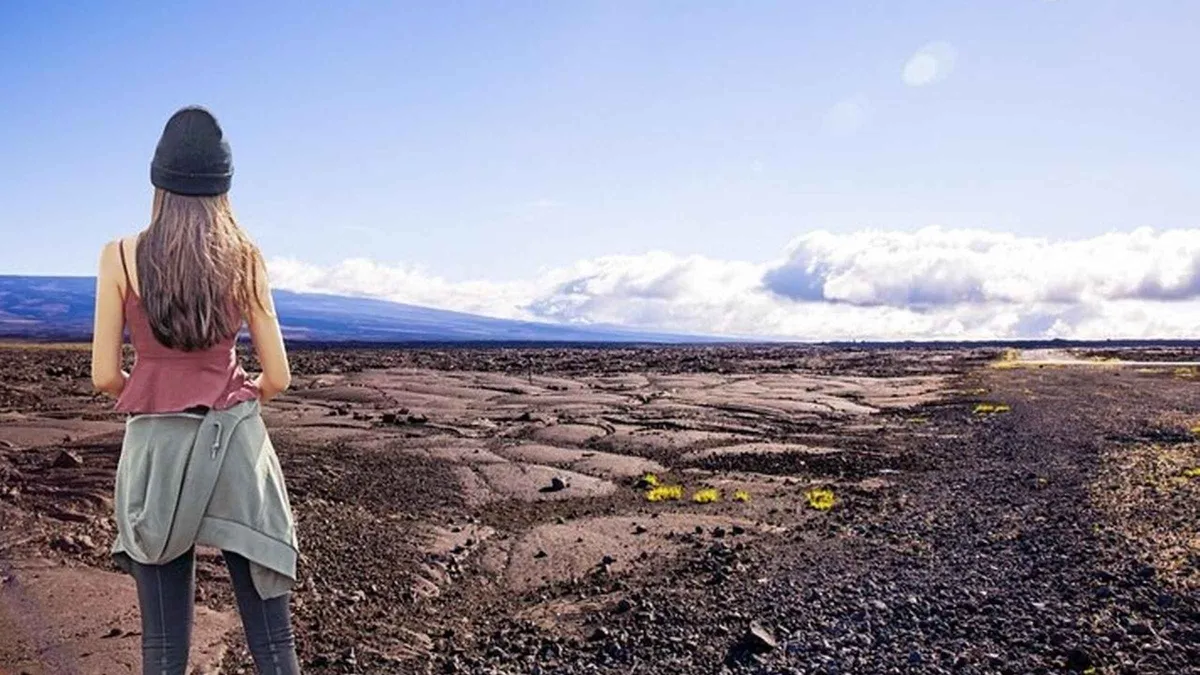
Big Island Hawaii Volcano Day Tour from Oahu with Hotel Pickup
The only listing here that collects you at your Waikiki hotel and hands you back there: 56 pickup points, flights to Hilo, park admission and a Hilo loop of Rainbow Falls, the farmers market and a black sand beach. Lunch is not included and the booking is non-refundable at any notice.
- Cancellation
- Non-refundable
- Operator
- Tournet Hawaii, Inc
 from $589.99
Best reviewed
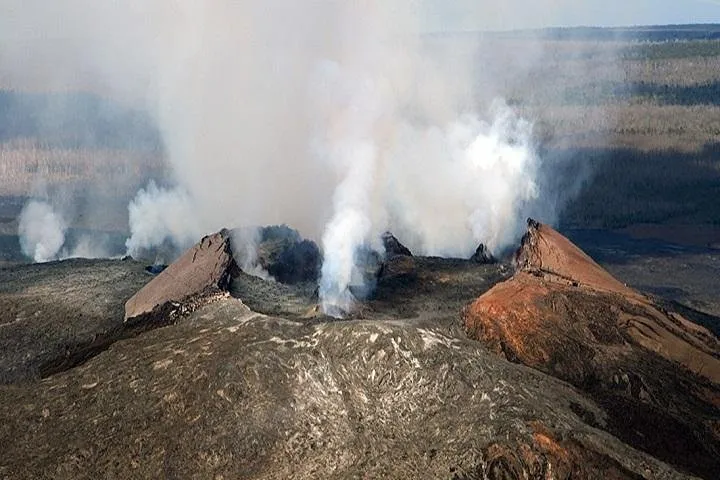
Hawaii Volcanoes National Park Experience Departing from Oahu
The strongest review record of any day trip from Oahu, 4.75 from 272 ratings, and the only one that spends its stated two hours in the park after crossing the island from Kona. Meals are yours, lunch is a stop at the Punaluu bake shop, and you get yourself to Honolulu airport.
- Round-trip Honolulu to Kona flights and park admission included
- Two hours inside Hawaii Volcanoes National Park
- Greenwell Farms coffee estate and Punaluu Bake Shop, the southernmost in the US
- Punaluu black sand beach and the Kohala Coast
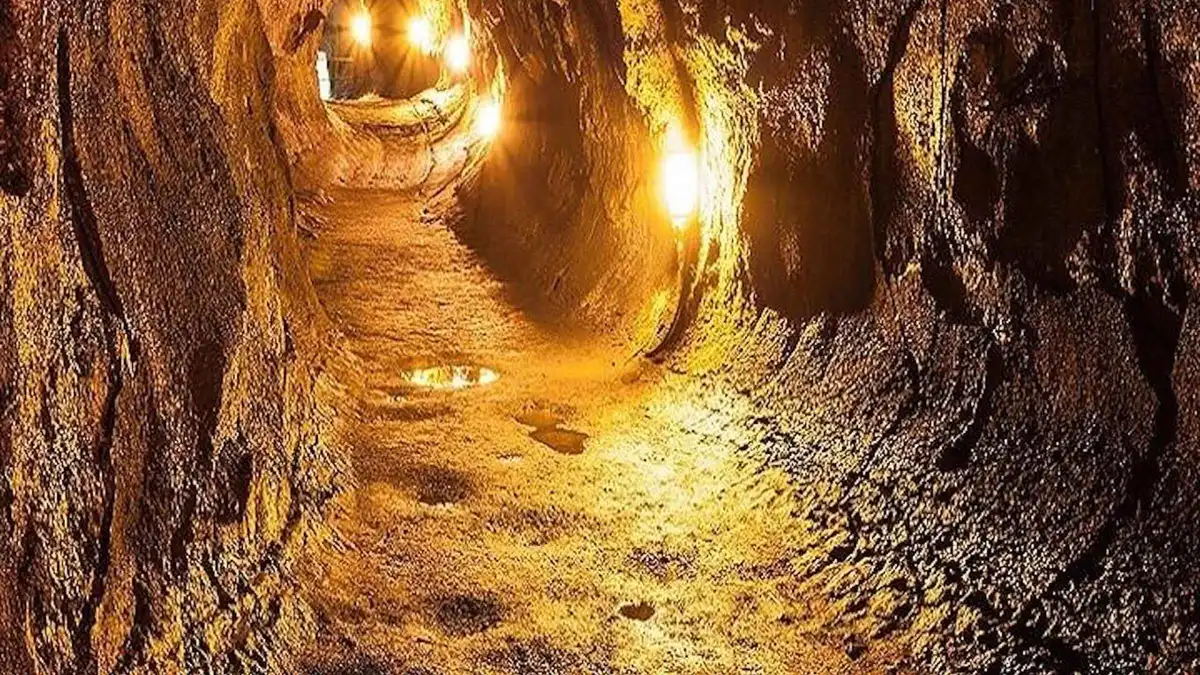
From Oahu: Hawaii Volcanoes National Park Experience
The only day trip that flies to Kona rather than Hilo, so it crosses the island through the Kona coffee belt and Punaluu black sand beach on the way to the park. Capped at 14 people. The listing rules out pregnant travellers and anyone with back, heart or respiratory problems, and meals are not included.
- Cancellation
- Free cancellation 24h
- Operator
- Aloha Sunshine Tours LLC
Why Does Kilauea Have Closed Off Areas?
Because the ground and air near the summit crater can injure or kill, and a rope line is cheaper than a rescue.
The three hazards
The US Geological Survey's Hawaiian Volcano Observatory says parts of Hawaii Volcanoes National Park near the summit are closed because of ongoing, persistent volcanic hazards that can cause serious injury or death. It names three. The table sets out each hazard and what it means for a visitor who is standing at an open overlook.
| Hazard | What the observatory says | What it means at an overlook |
|---|---|---|
| Volcanic gas | Trade winds usually carry sulfur dioxide southwest, and air quality in the closed area is consistently poor | Check air quality, since the gas is hazardous to sensitive groups |
| Explosions and ejected hot lava | Sudden rockfall into a lava lake could trigger an explosion, as happened with the 2008 to 2018 lava lake | Do not cross the closed-area line, however calm the crater looks |
| Cracks, cliffs and uneven ground | The 2018 summit collapse dramatically altered the terrain near the caldera rim and Halemaumau | Stay behind barriers, because the edge can fail |
The park's own wording
The National Park Service says the eruption area is closed due to significant hazards, and lists volcanic gas, loose and unstable cliff edges, ground cracks and falling tephra. Rope lines and hazard signs guard against volcanic fumes, sudden collapses and hidden cracks. It also says the park and emergency managers make public safety decisions from current conditions.
Fallout from a big episode widens the closure for days. On 10 March 2026 hazardous tephra fell over the summit, and the park closed the summit, its trails and overlooks, and Highway 11 between mile markers 24 and 40. When parts reopened on 18 March, Kilauea Overlook and Uekahuna, which had received the most fallout, stayed closed along with Crater Rim Drive West beyond Kilauea Military Camp. If your date follows a large episode, expect the western overlooks to be the last to reopen.
Source: USGS Hawaiian Volcano Observatory, National Park Service eruption viewing, NPS news release, 10 March 2026, NPS news release, 18 March 2026.
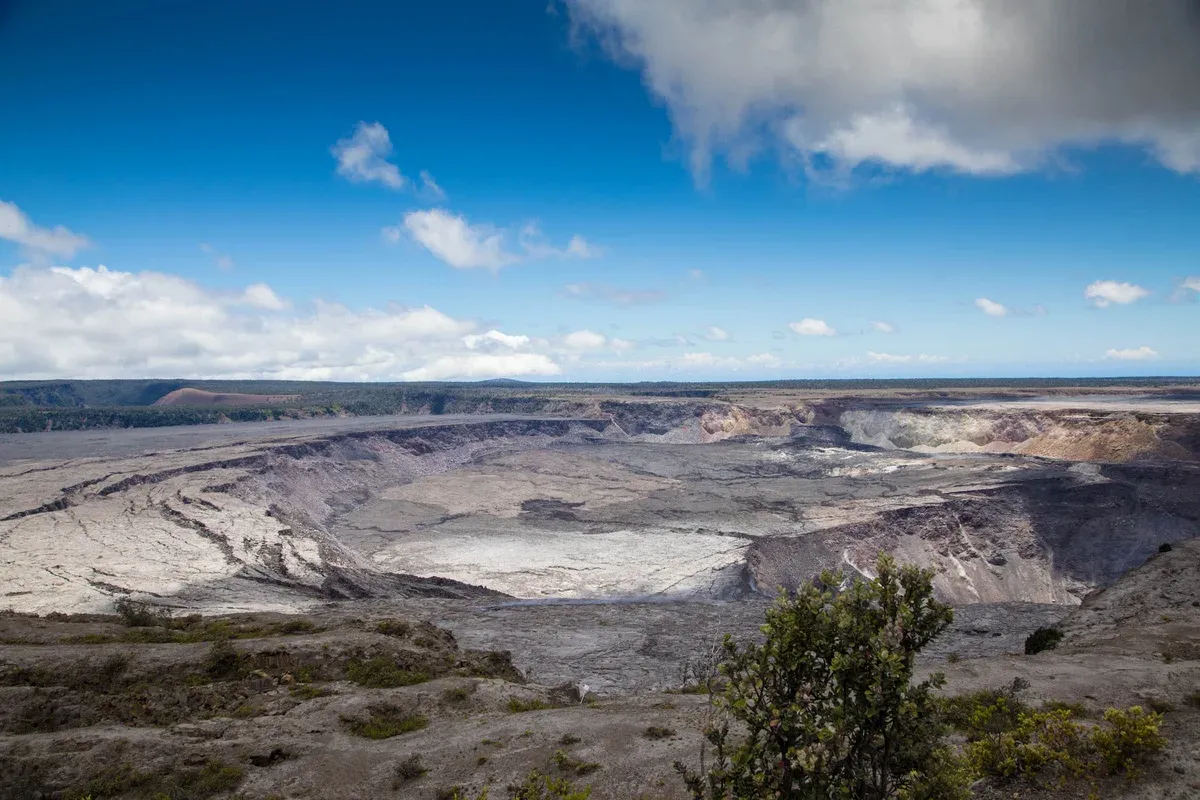
Photo: Hawai‘i Volcanoes NPS, Public domain, via Wikimedia Commons
What Changed in 2018 and Why Is the Crater Rim Still Closed?
The summit collapsed, and the crater grew to many times its old size, so the old rim is no longer solid ground.
How big the crater became
A National Park Service photograph from 17 August 2018 records the numbers. The deep inner pit of Halemaumau had grown to 1.5 km (about 0.9 mi) across, with a maximum depth of about 450 m (1,480 ft) according to USGS, inside an outer collapse zone about 2 by 3 km (1.2 by 1.9 mi). That is the ground the observatory means when it says the collapse dramatically altered the terrain near the rim.
The older closure
The Halemaumau crater rim has been closed to the public since late 2007, as the volcano safety guide notes. The 2018 collapse and the eruption that began on 23 December 2024 did not change that. The result is that the park's most famous view is available only from designated overlooks, and respect matters as well as safety.
The park describes the eruption as a reminder of sacredness in Hawaii and asks visitors to watch quietly and learn about the land's cultural significance to Native Hawaiians.
Source: National Park Service photograph, 17 August 2018.jpg), National Park Service eruption viewing.
Why Is the Kilauea Visitor Center Closed?
Because a two-year construction project is repairing or removing buildings damaged in 2018, and it has nothing to do with whether the volcano is erupting.
The project closures
The project repairs, improves or removes buildings and infrastructure damaged by the earthquakes, summit collapse and eruption of 2018. It began in January 2024 and was expected to last up to two years, and the park says the schedule is dynamic and subject to change. The table lists what it closed and what remains.
| Closure | What it means | Still open |
|---|---|---|
| Kilauea Visitor Center | Closed for renovation from 18 February 2025 to late 2026, including restrooms and about half its parking | Park store and the temporary Welcome Center at Kilauea Military Camp, daily 9 a.m. to 4:45 p.m. The permanent center sits 1.2 miles past the entrance station |
| Uekahuna overlook | Vehicles over 25 feet long or 8 feet wide cannot reach it until repairs finish | Steam Vents and the Kilauea Visitor Center parking lots for large vehicles |
| Tree Molds Road | Intermittent closures, pedestrians on paved sections only | Chain of Craters Road, Mauna Loa Road, Maunaulu, Puuloa and Kahuku |
| Jaggar Museum and the observatory buildings | Removed, and the museum will not be rebuilt | Overlooks along Crater Rim Drive |
Source: National Park Service construction closures, conditions.
What Can You Still See From Open Areas?
The summit caldera from the Crater Rim Drive overlooks, the lava tube, Kilauea Iki and Chain of Craters Road.
West and east of the Welcome Center
The park points visitors to overlooks along Crater Rim Drive. The Welcome Center, Kilauea Overlook and Uekahuna are reached by Crater Rim Drive West and usually have more parking. Kilauea Iki, the Nahuku lava tube, Devastation and Chain of Craters Road are reached by Crater Rim Drive East.
The park is open 24 hours a day, so the glow and fountains, which are most visible at night, are seen from these overlooks and not from inside the closed area. Parking at Nahuku and the summit is limited from 10 a.m. to 3 p.m., so arrive early.
What to carry
Bring a headlamp, sturdy shoes, warm clothing and a rain jacket. Add long sleeves, long pants, eye protection and a dust mask on days with tephra, and check air quality because gas can be hazardous to sensitive groups. The what to wear guide has the full list.
Source: National Park Service eruption viewing, plan your visit.
Can You Go Into the Closed Areas Anyway?
No, and no tour can take you there. The park does not publish a fine, but it does publish the risk.
What the park and the observatory say
The National Park Service asks visitors to stay out of closed areas, and the only penalty it publishes in its viewing guidance is towing for improper parking. The observatory conducts research in the closed area with permission and in partnership with the park, which is the only legitimate access. A booked day trip from Oahu runs on the open overlooks, so no operator can lawfully offer the vents.
A listing that hinted otherwise would be selling something the park does not allow.
Closed also means unpredictable
The eruption itself pauses for two or more weeks and then fountains for under 12 hours, so the closed area changes in how active it is but not in how dangerous it is. The what does erupting mean page explains the episode cycle, and can you visit Kilauea without a tour shows the open route.
Source: National Park Service eruption viewing, USGS Hawaiian Volcano Observatory.
How Do You Check What Is Closed Before You Go?
Use the park's own alerts and conditions pages, and call the park if the day is tight.
Where the live answer sits
Closures move, so the page you are reading cannot be the final word. The National Park Service keeps its conditions page, its construction closures page and its eruption viewing page current, and it lists the park's phone line, 808 985-6011. The park also asks visitors to check the park webcams, the observatory's daily updates and the air quality page, and it offers a park app.
If there is an eruption, expect extra waits at the entrance and arrive before sunrise or after sunset. The eruption status guide shows how to read the observatory's updates in a minute.
What to do if the day goes wrong
Fog and rain block views often at this elevation, and a closure can take away a stop. The park suggests Chain of Craters Road, Mauna Loa Road, Maunaulu, Puuloa and the Kahuku Unit as alternatives, and Kahuku is open Thursday to Sunday from 8 a.m. to 4 p.m. on Highway 11 near mile marker 70.5, about an hour from the main park. A booked trip has no such flexibility, which is the trade for not driving yourself.
Source: National Park Service conditions, plan your visit, hours.
What Should You Do About the Closures?
Four situations cover most visitors.
If You wanted to stand at the crater rim.
Use the Kilauea Overlook or Uekahuna overlook instead. The rim has been closed since late 2007.
If You drive a long RV or van.
Uekahuna is closed to vehicles over 25 feet long or 8 feet wide, so use the Steam Vents or visitor center lots.
If You have one day from Oahu.
Book the hotel pickup day tour or the 12-hour park experience, which both use open areas.
If You hope to see the eruption.
Go at dawn or after dark, check the status first and accept that pauses last two or more weeks.
How Do You See Kilauea From Oahu With the Closures?
Book a trip that is built around the open areas, because every day trip from Oahu already is.
What the trips include
Oahu has no active volcano, so the crossing is an inter-island flight of about 215 miles and roughly one hour. The table shows how the booked options use the open areas.
| Trip | Stops in open areas | Practical |
|---|---|---|
| Hotel pickup day tour, $585 | Kilauea Overlook, Steam Vents, Nahuku lava tube, Chain of Craters Road | Flies to Hilo, 56 Waikiki pickup points, non-refundable |
| 12-hour park experience, $589.99 | Two hours stated inside the park | Flies to Kona, free cancellation 24 hours |
| Small-group park experience, $590 | Steam vents and the Thurston lava tube | Limited to 14 participants |
Which fits the closures
Because the visitor center is closed for renovation, operators and visitors lean on the overlooks and Chain of Craters Road, which are not affected. Check the park's alerts the week you fly. The Oahu volcano tour homepage compares the trips, and volcano safety on Oahu explains what an operator cancels for.
Source: National Park Service conditions.
Closed Areas Questions
Why does the Kilauea volcano have closed off areas?
Ongoing hazards near the summit crater: volcanic gas, explosions of hot lava and cracked, unstable ground. The park and emergency managers set closures from current conditions.
Can you go to Kilauea right now?
Yes. The park is open 24 hours a day at $30 per vehicle, and the eruption is viewed from overlooks along Crater Rim Drive. The eruption area is closed.
Why is the Kilauea Visitor Center closed?
It is being renovated from 18 February 2025 to late 2026 as part of a project repairing damage from 2018. The temporary Welcome Center and park store operate at Kilauea Military Camp, daily 9 a.m. to 4:45 p.m.
Will the closures affect a day trip from Oahu?
Not the main stops. The hotel pickup day tour lists the Kilauea Overlook, Steam Vents, Nahuku lava tube and Chain of Craters Road, which are open areas.
Is the Halemaumau crater rim open?
No. It has been closed to the public since late 2007, and the 2018 collapse made the pit about 1.5 km across and 450 m deep. See it from an overlook.
Is it safe to visit Kilauea with the closures?
Yes, inside the open areas. Stay behind the rope lines, check air quality and park alerts, and read the volcano safety guide.
Who decides what is closed?
The National Park Service and emergency managers, based on current conditions. The observatory researches in the closed area with permission.