 Oahu Volcano Tours
What Are the Four Types of Lava?
The four types of lava are pahoehoe, aa, blocky and pillow, and only pahoehoe and aa form on land at Kilauea, the volcano that Oahu visitors cross the sea to see. Each type is shown below by how it forms and what it looks like underfoot, along with where the lava goes after it erupts and which one you can see on an Oahu volcano tour.
Quick answer The short answer
The four types of lava flow are pahoehoe, aa, blocky and pillow. Pahoehoe forms smooth or ropy flows a few inches to a few feet thick, and aa forms rough clinker flows that can reach about 11 m (36 ft) thick. Blocky lava is thick and slow and comes from chemistries Hawaii does not erupt, and pillow lava forms under water. Kilauea makes only pahoehoe and aa on land, so those two are the ones a visitor can see.
Key takeaways
- Four types: pahoehoe (smooth or ropy), aa (rough and jagged), blocky (large angular blocks, 10 to 200 m thick) and pillow (rounded lobes formed under water or ice).
- Kilauea is a basalt volcano, so on land it makes pahoehoe and aa. The eruption status guide shows whether it is erupting now, in short episodes with pauses of two or more weeks.
- Oahu has no active volcano, so you cannot see lava forming here. The 12-hour park experience at $589.99 and the hotel pickup day tour at $585 fly you to the Big Island, where the park walks you past hardened lava, steam vents and a lava tube.
- Compare every departure on the Oahu volcano tour homepage before you choose.
Day Trips From Oahu to the Lava Landscape
None of these tours promises to show flowing lava, because eruptions come in pauses. They do walk you through the fields of hardened lava, a lava tube and the summit overlooks, which is where the lava types are easy to tell apart.
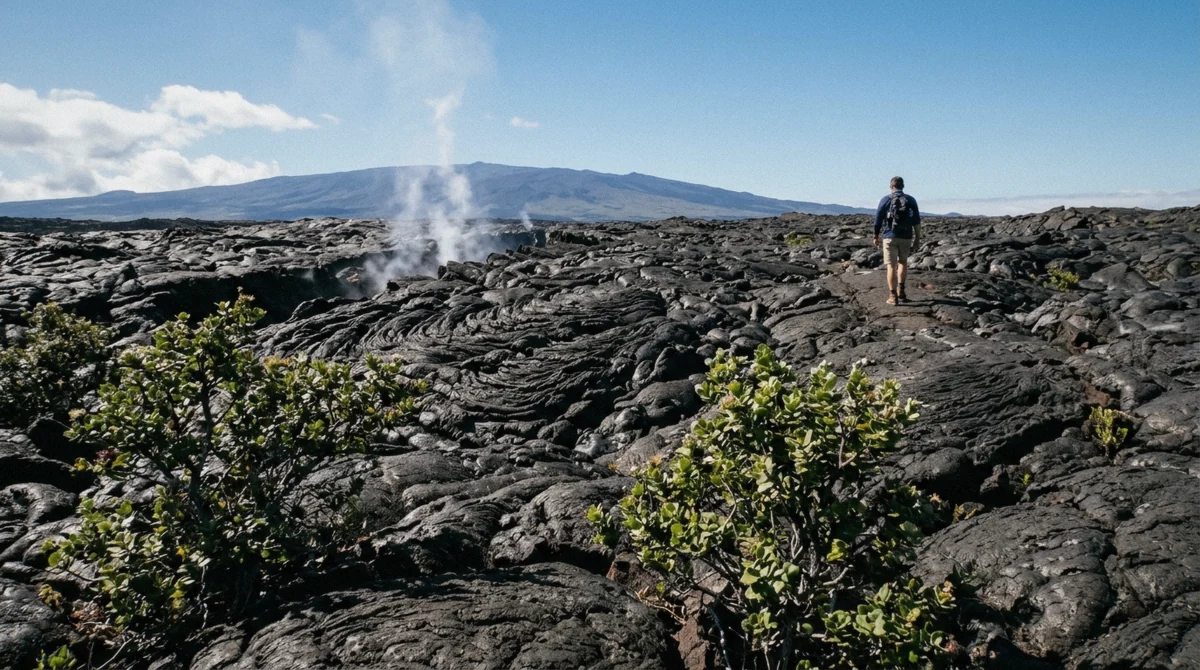
Big Island Hawaii Volcano Day Tour from Oahu with Hotel Pickup
The only listing here that collects you at your Waikiki hotel and hands you back there: 56 pickup points, flights to Hilo, park admission and a Hilo loop of Rainbow Falls, the farmers market and a black sand beach. Lunch is not included and the booking is non-refundable at any notice.
- Cancellation
- Non-refundable
- Operator
- Tournet Hawaii, Inc
 from $589.99
Best reviewed
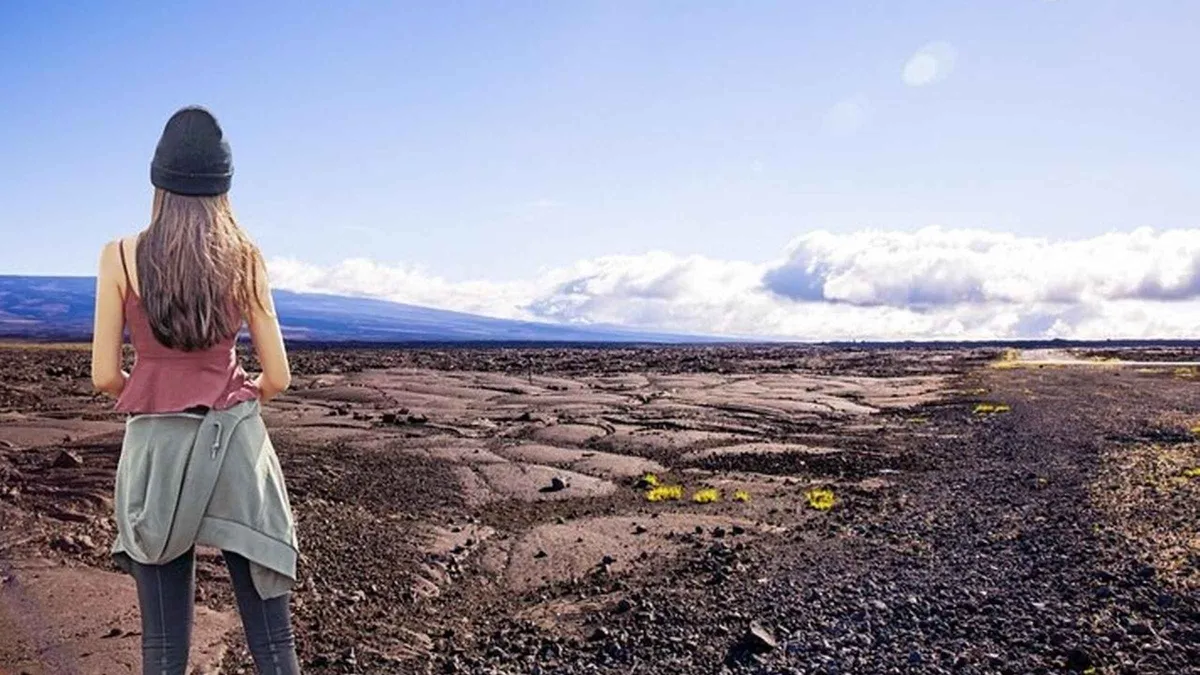
Hawaii Volcanoes National Park Experience Departing from Oahu
The strongest review record of any day trip from Oahu, 4.75 from 272 ratings, and the only one that spends its stated two hours in the park after crossing the island from Kona. Meals are yours, lunch is a stop at the Punaluu bake shop, and you get yourself to Honolulu airport.
- Round-trip Honolulu to Kona flights and park admission included
- Two hours inside Hawaii Volcanoes National Park
- Greenwell Farms coffee estate and Punaluu Bake Shop, the southernmost in the US
- Punaluu black sand beach and the Kohala Coast
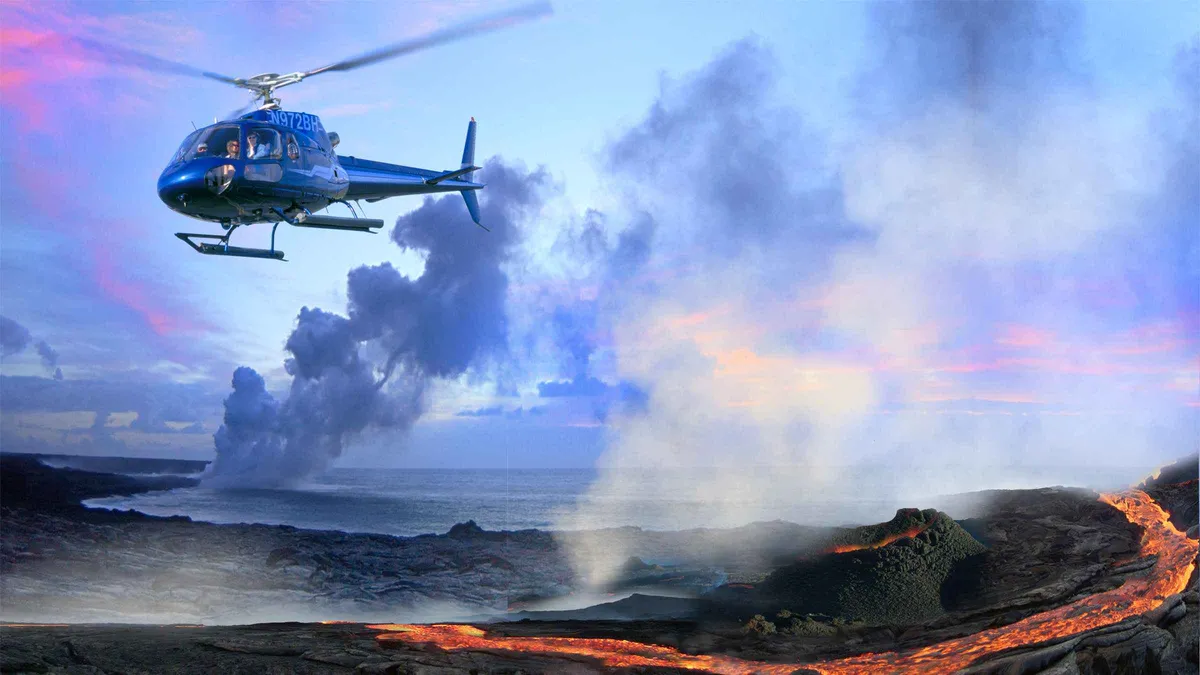
From Oahu: Big Island Volcano Adventure & Helicopter
Polynesian Adventure's long day: 3 hours 50 minutes inside the park, picnic lunch, Akaka Falls, and a 45-minute Blue Hawaiian helicopter flight. The listing contradicts itself on the flight, which is named in the inclusions and marked optional at extra cost in the itinerary, so confirm it at checkout. No hotel pickup at either end.
- Cancellation
- Free cancellation 24h
- Operator
- Polynesian Adventure
What Are the Four Types of Lava?
Pahoehoe, aa, blocky and pillow, sorted by the surface the flow ends up with and the setting it formed in.
The four types side by side
Geologists name lava flows by their surface and by how they cool. The table gathers what the National Park Service and Oregon State University's volcano pages say about each, with one column for whether Kilauea makes it.
| Type | Surface | How it forms | Size and speed | Kilauea? |
|---|---|---|---|---|
| Pahoehoe | Smooth, billowy or ropy | Fluid lava erupted slowly on gentle slopes, as sheets, channels or lava tubes | Flows a few inches to a few feet thick | Yes |
| Aa | Rough, jagged, clinkery | Lava too viscous or moving too fast to deform smoothly, so the crust tears into clinkers | Up to about 11 m (36 ft) thick, recorded at up to 33 m/min (about 108 ft/min) | Yes |
| Blocky | Large angular blocks | Thick lava of chemistries other than basalt | 10 to 200 m (33 to 656 ft) thick, very slow | No |
| Pillow | Rounded, interconnected lobes with glassy skins | Eruption under water or ice, usually at low rates | Lobes stack into piles | Only where lava meets water |
Source: National Park Service, Lava Flow Forms, Oregon State University Volcano World.
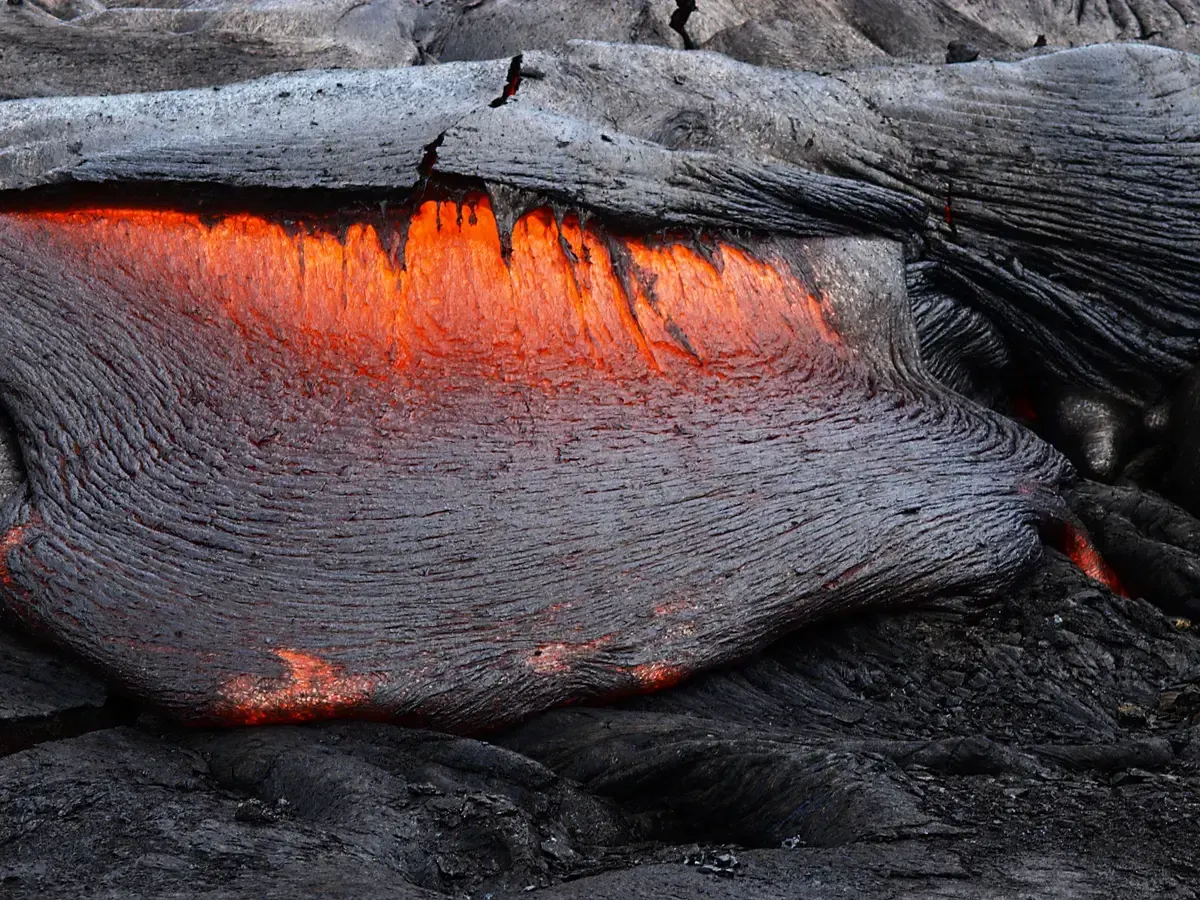
Photo: Rufiyaa, CC BY-SA 4.0, via Wikimedia Commons
What Is Pahoehoe Lava?
Pahoehoe is the smooth, billowy or ropy lava, and it is the most common type you will see on the Big Island.
Why pahoehoe looks like rope
Pahoehoe forms when lava is more fluid and less viscous, erupted slowly and moving at low speed on gentle slopes. A thin skin cools on top while the flow keeps moving underneath. That skin gets dragged and wrinkled downstream, which is where the ropy texture comes from.
Pahoehoe advances in small buds called toes, usually up to a few feet wide, and a flow can travel as a sheet, as a channel or inside a lava tube.
Pahoehoe has its own subtypes
The park describes shelly pahoehoe, with a thin crust over gas-formed tubes and blisters, slabby pahoehoe, with broken and overturned plates of crust, and spiny pahoehoe, which comes from more viscous lava with gas bubbles. You do not need the names on a visit. You need one rule: if the ground looks like poured, wrinkled rope or smooth black glass, it is pahoehoe, and walking on it is easy compared with the alternative.
Source: National Park Service, Lava Flow Forms, USGS Volcano Watch.
What Is Aa Lava and Why Does It Look So Different?
Aa is the rough, jagged lava, and it forms when the lava moves too fast or is too thick to stay smooth.
The clinker field
Aa lava has a surface of spiny, jagged clinkers. The surface is either too viscous or flowing too fast to deform plastically, so shear strain tears it into a rubble of broken pieces on top of the flow. Underneath, the interior is massive and dense, and clinkers also collect at the bottom.
It erupts at higher rates than pahoehoe, it is thicker, and it travels farther from the vent. One flow recorded by Oregon State's volcano pages reached about 11 m (36 ft) thick and moved at up to 33 m/min (about 108 ft/min). The Kilauea lower East Rift Zone eruption of 2018 produced aa.
Why it advances in surges
USGS describes aa advancing unevenly. A front may creep a few metres in an hour and then surge about 100 m (330 ft) in a few minutes. The flow also gets thicker and more pasty as it cools and grows crystals, which makes it harder to push along.
That is one more reason the park keeps visitors behind the closed-area line. The volcano safety guide covers what a closure means for your day.
Source: National Park Service, Lava Flow Forms, USGS Volcano Watch, Oregon State University Volcano World.
Can Pahoehoe Turn Into Aa?
Yes, and it only goes one way: pahoehoe can become aa, but aa generally does not change back.
What triggers the change
USGS says a pahoehoe flow can turn into aa after a sudden steepening of the slope or through continued loss of heat and gas as it travels. The two types share the same chemistry. Oregon State's pages state that there is no systematic chemical difference between aa and pahoehoe and that identical compositions can form either.
What decides it is viscosity, the resistance to flow, and the rate of shear strain. At high shear strain the change happens at lower viscosity, and at low shear strain it needs higher viscosity.
What it means on the ground
A single eruption can leave both types side by side. Near the vent you may find pahoehoe, and farther down the slope the same flow becomes a field of aa clinkers. If you walk a long lava field in the park, expect to cross both textures, and expect the aa to be harder on shoes.
The what to wear guide explains why closed shoes with a firm sole matter.
Source: USGS Volcano Watch, Oregon State University Volcano World.
What Are Blocky and Pillow Lava?
Blocky and pillow lava complete the four types, and neither is the lava you meet walking around Kilauea.
Blocky lava
Block lava has a surface of large angular blocks and is associated with chemistries other than basalt. It is very thick, from 10 to 200 m (33 to 656 ft), and moves slowly. Kilauea erupts basalt, so it does not make block lava.
Oregon State's pages do not list it as a basaltic type at all, which is why some lists say Hawaii has only three. The four-way list answers the question that a general reader asks, and the Hawaii answer is two.
Pillow lava
Pillow lava forms from eruptions under water or ice, usually at low effusion rates. It builds rounded, interconnected lobes with thicker glassy skins and generally radial fractures. To prove a rock is true pillow lava, geologists look for water-laid sediment or hyaloclastite between the pillows.
You will not see it form at the summit of Kilauea, and nothing on an Oahu day trip needs diving gear to find it.
Where Does Lava Go After It Erupts?
At Kilauea's summit it stays inside the caldera, cools into rock and builds up the floor of the crater.
Inside the caldera, then into rock
The US Geological Survey's Hawaiian Volcano Observatory reports that during the eruption that has run since 23 December 2024, the lava flows stay contained to the caldera, and the fallout of tephra can reach nearby downwind areas. The eruption comes in short episodes that generally last less than 12 hours, with pauses of two or more weeks. When an episode ends, the lava stops moving and cools into solid pahoehoe or aa.
The rock stays where it stopped. The what does erupting mean page explains the episode and pause cycle.
Other places lava can go
A pahoehoe flow can travel through a lava tube, which keeps it hot and fluid over a long distance, and the park's Nahuku lava tube, called Thurston on older maps, is a cave of that kind. Lava that reaches water forms pillows. And hot ejected material falls as tephra, which is why the park reminds visitors to carry eye protection and a dust mask on days with fallout.
For the practical side of getting close, read can you visit Kilauea without a tour.
Source: USGS Hawaiian Volcano Observatory, National Park Service eruption viewing.
Which Lava Type Can You See on a Day Trip?
Hardened lava fields, a lava tube and the summit crater, rather than a live flow.
What each stop shows
Hawaii Volcanoes National Park is open 24 hours a day, and entry is $30 per private vehicle or $15 per person on foot. Day trips from Oahu include the entry. The stops below are named on the tour listings and by the park, and the lava type in the last column is what the stop is about, not a promise about a given morning.
| Stop | What it is | Lava type to look for |
|---|---|---|
| Nahuku lava tube | A cave left by a draining flow | Pahoehoe tube |
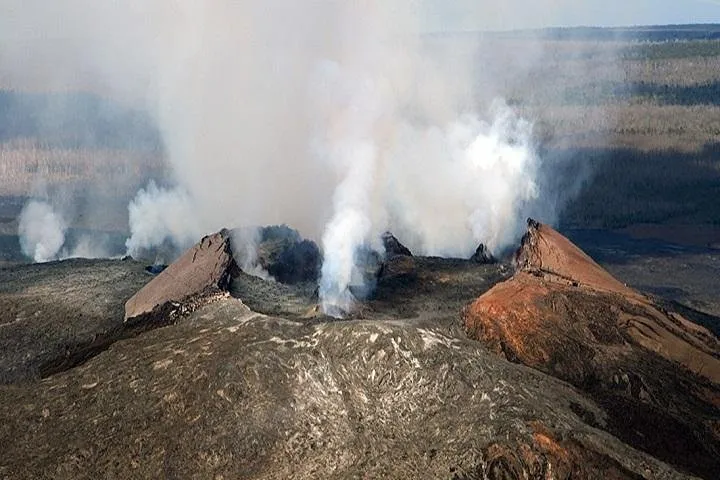
| Steam Vents | Ground heated by magma below | Hardened flows with steam rising through cracks |
| Chain of Craters Road | A drive down the slopes toward the sea | Hardened lava slopes, type varies by flow |
| Kilauea Overlook | A view across the summit caldera | Lava that filled the summit caldera |
Pick the trip that fits
The hotel pickup day tour at $585 lists the Kilauea Overlook, Steam Vents, Nahuku lava tube and Chain of Craters Road, with the Waikiki pickup. The 12-hour park experience at $589.99 gives two hours stated inside the park. The helicopter version at $810 gives 3 hours 50 minutes in the park and lists a 45-minute flight over the terrain, though its itinerary also marks that flight as an optional extra, so confirm it at checkout.
Eruption timing is not guaranteed on any of them.
Source: National Park Service fees, eruption viewing.
Is There Lava on Oahu?
No, Oahu's volcanoes are extinct and its craters are made of cinder, ash and tuff, not flowing lava.
What Oahu has instead
Oahu has no active volcano. The Waianae and Koolau ranges are extinct shield volcanoes, and the craters visitors climb were formed by explosive eruptions. The active volcanoes on Oahu page lists them one by one.
Diamond Head is the easiest to visit, with a trail that takes 1.5 to 2 hours round trip and a last entry at 4:30 pm. The Diamond Head sunrise shuttle costs $64 and includes the transfer. To see the lava types above, you must cross to the Big Island.
The realistic way to see it from Oahu
The crossing is an inter-island flight of about 215 miles and roughly one hour, and there is no ferry. A booked day trip bundles the flight, the park and the ground transport. If you would rather stay on Oahu, walk a crater for the geology and take one day trip for the lava itself, and leave every piece where it lies, since taking lava rocks is illegal.
The Oahu volcano tour homepage compares every departure, and the Honolulu day trip guide shows how the 12 hours run.
Source: National Park Service.
Types of Lava Questions
What are the four types of lava?
Pahoehoe, aa, blocky and pillow. Pahoehoe is smooth or ropy, aa is rough and jagged, blocky has large angular blocks, and pillow forms rounded lobes under water.
Which lava types does Kilauea make?
Pahoehoe and aa. Kilauea is a basalt volcano, so it does not make block lava, and pillow lava needs water or ice.
What is the difference between pahoehoe and aa?
Surface and speed. Pahoehoe is smooth and thin, and aa is a rough clinker field that can be about 11 m thick and surge about 100 m in minutes.
Can you walk on lava rock?
Yes, on cooled lava inside the open areas, but not in the closed area around the eruption. Wear closed shoes, because aa is rough. See the volcano safety guide.
Can you see lava from Oahu?
No, there is no active lava on Oahu. The 12-hour park experience flies to the Big Island, and eruptions happen in short episodes, so lava is not guaranteed.