 Oahu Volcano Tours
Why Is It Illegal to Take Lava Rocks?
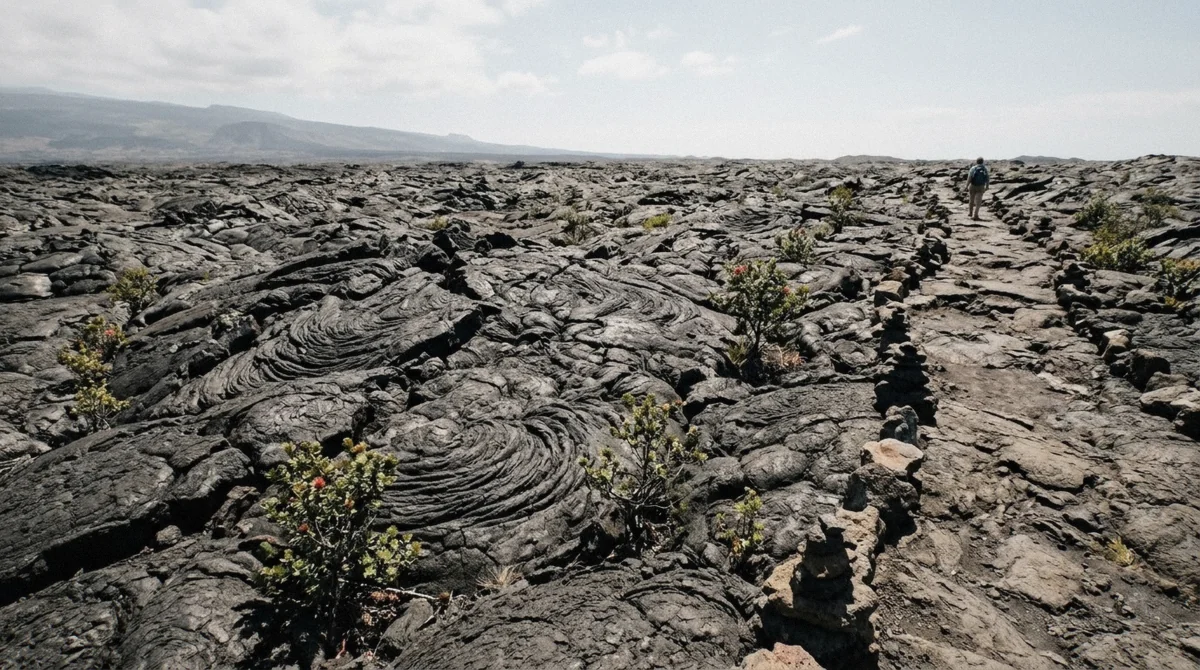
It is illegal to take lava rocks from Hawaii Volcanoes National Park because federal regulation 36 CFR 2.1 protects natural resources. The rule, the state law, Pele's curse as folklore and what to do instead are covered below for anyone heading over from Oahu.
Quick answer The short answer
Taking lava rocks from Hawaii Volcanoes National Park is illegal because federal regulation 36 CFR 2.1 bars removing natural resources, and the park names lava of any description, Pele's hair, Pele's tears, dirt and sand as protected. Hawaii also bans taking sand, dead coral and coral rubble statewide.
Key takeaways
- The rule is a law, not a legend. Possessing or removing park lava is illegal, and scientific collecting needs a permit.
- Pele's curse is folklore. No agency documents it, but the cultural reason behind it is real: many Hawaiians regard lava as one of the forms of the goddess Pele, and the National Park Service calls taking pieces of her disrespectful.
- The legal line is the land, not the rock. National parks forbid taking anything. State law names sand, dead coral and coral rubble. Shells and beach glass are allowed.
- You do not need a souvenir to remember the volcano. A Big Island volcano day trip from Oahu walks the lava tube, the steam vents and the overlooks.
- More on what the park keeps closed in the closed areas guide and on the rock types in the four types of lava.
See the Lava Legally on a Day Trip From Oahu
These trips reach the park, where you can look at and photograph lava surfaces and leave them where they are.
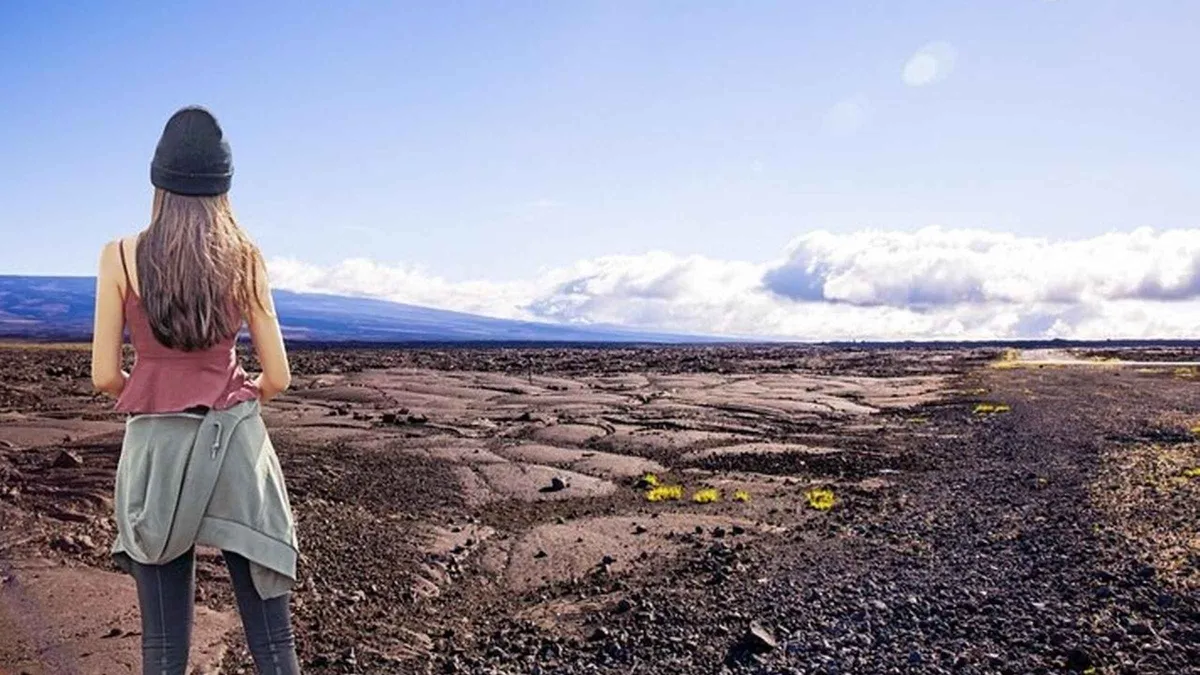
Big Island Hawaii Volcano Day Tour from Oahu with Hotel Pickup
The only listing here that collects you at your Waikiki hotel and hands you back there: 56 pickup points, flights to Hilo, park admission and a Hilo loop of Rainbow Falls, the farmers market and a black sand beach. Lunch is not included and the booking is non-refundable at any notice.
- Cancellation
- Non-refundable
- Operator
- Tournet Hawaii, Inc
 from $589.99
Best reviewed
Hawaii Volcanoes National Park Experience Departing from Oahu
The strongest review record of any day trip from Oahu, 4.75 from 272 ratings, and the only one that spends its stated two hours in the park after crossing the island from Kona. Meals are yours, lunch is a stop at the Punaluu bake shop, and you get yourself to Honolulu airport.
- Round-trip Honolulu to Kona flights and park admission included
- Two hours inside Hawaii Volcanoes National Park
- Greenwell Farms coffee estate and Punaluu Bake Shop, the southernmost in the US
- Punaluu black sand beach and the Kohala Coast
 from $576
Free cancellation
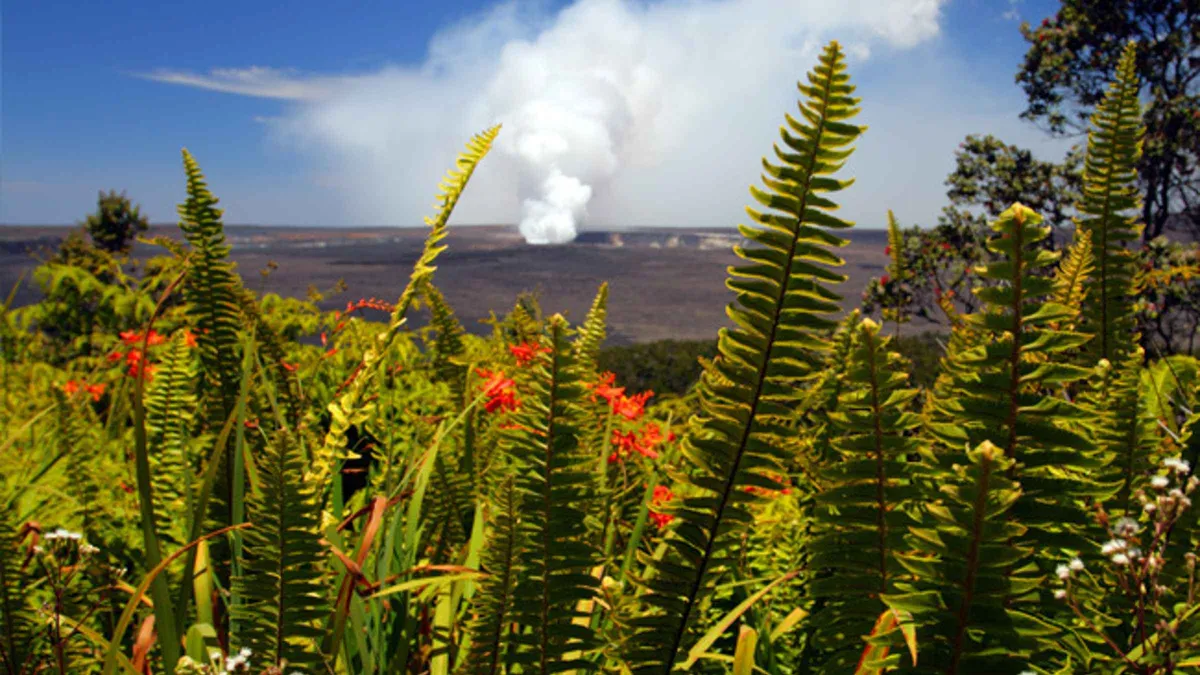
From Oahu: Big Island Volcano Adventure
The same Polynesian Adventure day without the helicopter, which is what the $234 gap between the two buys. Picnic lunch, park entry and the Hamakua Coast are all in. You clear TSA at Honolulu yourself and arrange your own ride to the airport at 4am.
- The same operator and route as the helicopter version, $234 less
- Picnic lunch in the park and park entry included
- Akaka Falls, the Hamakua Coast, Rainbow Falls and Banyan Drive
- Free cancellation up to 24 hours before
Why Is It Illegal to Take Lava Rocks?
Because in Hawaii Volcanoes National Park lava is a protected natural resource under federal regulation, and removing it is a violation.
What the park's rulebook says
The park's superintendent's compendium treats Pele's hair, Pele's tears, lava of any description, dirt, sand and other natural mineral resources as mineral resources under 36 CFR 2.1. Possessing or removing them from the park is illegal. The compendium also says collecting for scientific study requires a permit, and research in areas closed for volcanic hazards is permitted only when the study directly supports hazard planning, mitigation or injury prevention.
A visitor cannot collect a rock for a school project or a souvenir. The table shows what counts.
| Item | Park rule | Source |
|---|---|---|
| Lava of any description | Possessing or removing is illegal | Compendium, 36 CFR 2.1 |
| Pele's hair and Pele's tears | Same rule (thin glass threads and glass beads formed in eruptions) | Compendium |
| Dirt and sand | Same rule | Compendium |
| Cinder | Do not take rocks or cinder from Haleakala National Park, which the park calls disrespectful and against the law | NPS Haleakala |
| Scientific collecting | Requires a permit | Compendium, section 2.5 |
The general principle
The National Park Service's own wording for a sister park is plain: it is against the law to remove anything from a National Park. The rule protects the landscape that visitors travel to see, and the practical result is the same everywhere in the system.
Source: NPS, Superintendent's compendium, NPS, Haleakala deities.
Is It Illegal to Take Lava Rocks From Any Beach or Park in Hawaii?
It depends on where you are standing, so the safe rule is to take nothing from a park and to check the land manager elsewhere.
What each layer says
Federal parks forbid taking natural resources. Hawaii's Department of Land and Natural Resources states that taking sand, dead coral and coral rubble is illegal statewide, under Hawaii Revised Statutes 171-58.5 and 205A-44. The department's page says collecting beach glass and shells is still allowed, and shells for commercial use require a Commercial Marine License.
The table sets out what each layer covers and what it leaves to you.
| Where | What the rule covers | Source |
|---|---|---|
| Hawaii Volcanoes and Haleakala national parks | Lava, cinder, dirt, sand and any natural resource | NPS |
| Any Hawaii beach, statewide | Sand, dead coral and coral rubble | Hawaii DLNR |
| Any Hawaii beach | Beach glass and shells may be collected, commercial shell collecting needs a licence | Hawaii DLNR |
| Other land | Ask the landowner or land manager before taking any rock | General rule |
Why the cultural rule travels with you
A legal gap does not make a rock yours. The cultural reasoning is the same whichever land the rock is on, and many visitors choose to follow it. The folklore of Pele's curse explains where it comes from.
Source: Hawaii DLNR, sand and coral, NPS, Superintendent's compendium.
What Is Pele's Curse?
It is folklore: a story that bad luck follows anyone who takes lava from Hawaii, and no official body treats it as fact.
What is legend and what is documented
The curse as told to tourists is a modern folk belief. What the National Park Service documents is the cultural background behind it. Halemaumau crater is the traditional home of the volcano deity Pelehonuamea, and lava is one of her many forms, called kino lau.
The Haleakala page says visitors take pieces of Pele from Hawaii every year, which to Hawaiians is disrespectful. The park also notes that versions of the stories vary, sometimes significantly. Treat the curse as a story, and the respect as the real point.
| Layer | What it is | Status |
|---|---|---|
| Law | 36 CFR 2.1 and Hawaii statutes on sand and coral | Enforceable |
| Cultural view | Lava is a form of Pele, taking it is disrespectful | Documented by the park |
| Pele's curse | Bad luck follows the taker | Folklore, not documented |
What the park asks of visitors
The park describes the eruption as a reminder of the sacredness of the place and asks visitors to watch quietly and learn about the land's cultural meaning for Native Hawaiians. That request applies to a lava rock in the same way it applies to an overlook.
Source: NPS, Haleakala deities, NPS, Pele and Hiiaka, NPS, Eruption viewing.
Is It Illegal to Take Obsidian or Pele's Tears?
In the national park, yes, because the rule covers lava of any description and Pele's hair and tears by name.
Volcanic glass
Pele's hair and Pele's tears are the park's names for thin threads and small beads of volcanic glass formed when gas-rich lava is thrown into the air. The compendium names both, so a visitor who finds a strand of Pele's hair on a trail is looking at a protected resource and should leave it. Obsidian is also volcanic glass, and the park rule on natural resources is broad, so treat it the same.
Outside a park, the state rule names only sand, dead coral and coral rubble, so ask the land manager before you take anything. A small piece in a pocket is the usual way travellers break the rule without meaning to, so check your hands and your shoes at the end of a trail.
Who Is Pele and Why Is Lava Treated as Hers?
Pele is the Hawaiian volcano deity, and Halemaumau crater at Kilauea's summit is her traditional home.
From the park's own telling
The National Park Service tells the story of Pele and her sister Hiiaka as a moolelo, a traditional account. In it Pele lived at the summit of Kilauea, set fire to the ohia groves of Puna in jealousy and covered Hiiaka's friend Hopoe with lava. The park notes that versions of the story vary, sometimes significantly, so it is a tradition and not a record.
For Hawaiians the lava is one of Pele's forms, which is why a pocketed rock is read as taking a piece of her. That is a belief held by people, which a visitor can respect without having to hold it. It is also why the park asks you to watch an eruption quietly.
Source: NPS, Pele and Hiiaka, NPS, Haleakala deities.
What Can You Take Home From Hawaii Instead?
Photographs, shells and beach glass where the law allows, and objects bought from a shop.
Safe souvenirs
Beach glass and shells may be collected, according to the Department of Land and Natural Resources, and sand and dead coral may not. Photographs cost nothing and take nothing. Objects bought in a shop, such as a book or a print, are the cleanest way to remember the place.
The volcano itself is better remembered by seeing it than by carrying it.
Source: Hawaii DLNR, sand and coral.
Where Can You See Lava Rock Legally From Oahu?
On the Big Island, since Oahu has no active volcano and its rock is old and extinct.
The realistic way
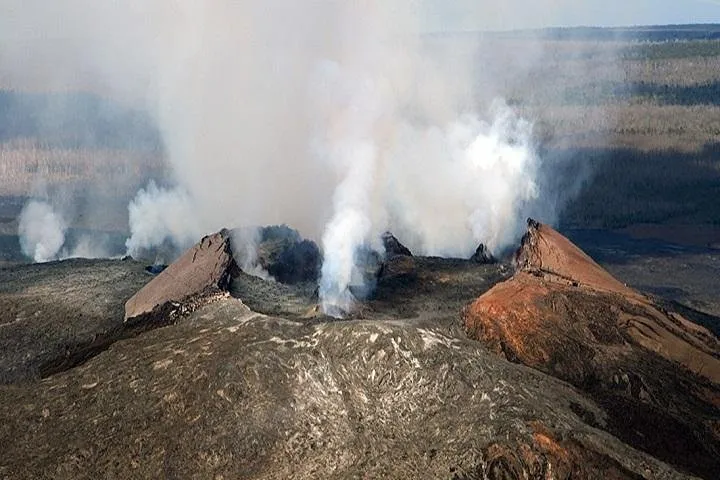
The surfaces you want are on the Big Island, so the trip is a flight from Honolulu to Hilo or Kona and a drive to Hawaii Volcanoes National Park. The hotel pickup day trip lists the Kilauea Overlook, the Steam Vents, the Nahuku lava tube and Chain of Craters Road. The 12-hour park experience lists two hours inside the park.
The park charges $30 per vehicle or $15 per person on foot if you go alone, and day trips list whether admission is included. The Kona or Hilo guide helps you choose the side. If the eruption is active, the status guide tells you how to watch from the overlooks.
Source: NPS, Fees and passes.
What Happens on a Day Trip If Someone Picks Up a Rock?
The rule is the same on a tour as on a self-drive, and the answer is to put it back.
Simple habits that keep you right
Stay on marked trails and behind the rope lines, leave rocks, sand and cinder where they lie, and do not pocket anything from a trail. Kids pick things up, so say it before the first stop. The volcano safety guide covers the closed areas and the gas.
If your plan is to touch a lava surface, the pahoehoe and aa difference is explained in the four types of lava.
What Should You Do?
Four situations.
If You found a small rock on a park trail.
Leave it. Possessing park lava is illegal under 36 CFR 2.1.
If You want a souvenir of the volcano.
Buy a book or a print at the park store, or take photographs.
If You are on an Oahu beach.
Do not take sand or dead coral, which state law bans. Beach glass and shells may be collected.
If You want to see lava properly.
Take the Oahu volcano tour to the Big Island and watch from the overlooks.
Lava Rock Questions
Can you take a piece of lava rock from Hawaii?
Not from a national park. Park lava is protected under 36 CFR 2.1. State law bans sand, dead coral and coral rubble.
Why is it bad to take lava rocks from Hawaii?
It is illegal in parks, and the National Park Service says it is disrespectful to Hawaiian culture, since lava is a form of Pele.
Is it illegal to take rocks from the beach in Hawaii?
Sand, dead coral and coral rubble are illegal to take statewide. Beach glass and shells may be collected.
Is Pele's curse real?
It is folklore. No agency documents it, and the real reason to leave lava is the law and respect.
Can scientists collect lava?
Yes, with a permit. Research in hazard-closed areas is allowed only when it supports hazard planning or safety.
Is cinder protected too?
Yes. The park calls taking rocks or cinder disrespectful and illegal.
Where can I see lava rock from Oahu?
Take a day trip to the Big Island, because Oahu has no active volcano.